Reel · 1:10
Systems reel
Opens on Pain Deck in Tabletop Simulator, then Lyram’s level flow and traversal, Luxenomicon, IPSC Shooter, Mermory, and Organa Tales. Music: my IPSC rock track “Pincer”.
“What will make a player want to come back?”
Every game I work on starts with that question. I’m a systems designer first: I prototype, test, and iterate until a game feels right in the player’s hands. Story, music, and sound are how I build the world around those systems.
Opens on Pain Deck in Tabletop Simulator, then Lyram’s level flow and traversal, Luxenomicon, IPSC Shooter, Mermory, and Organa Tales. Music: my IPSC rock track “Pincer”.
Lyram’s story and characters, the world of Organa, Hull Ghosts, Tide Wars, and InnovATL. Music: my “Hero vs. Villain” score.
A 32-second Orcs Must Die! Deathtrap sound redesign, synthesized trailer effects, layered SFX, and mobile game sounds, then music for Lyram, InnovATL, and a platformer.
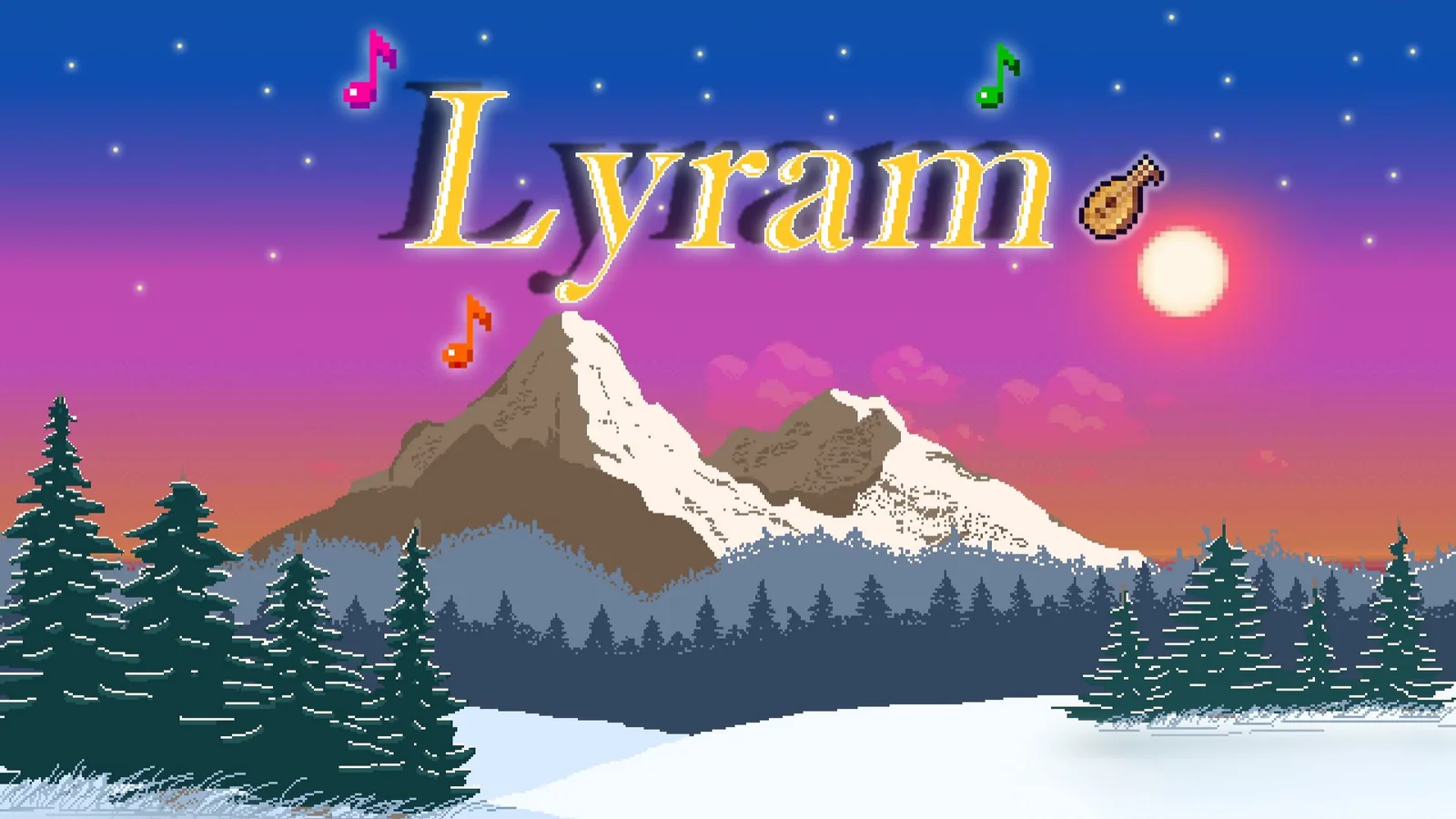
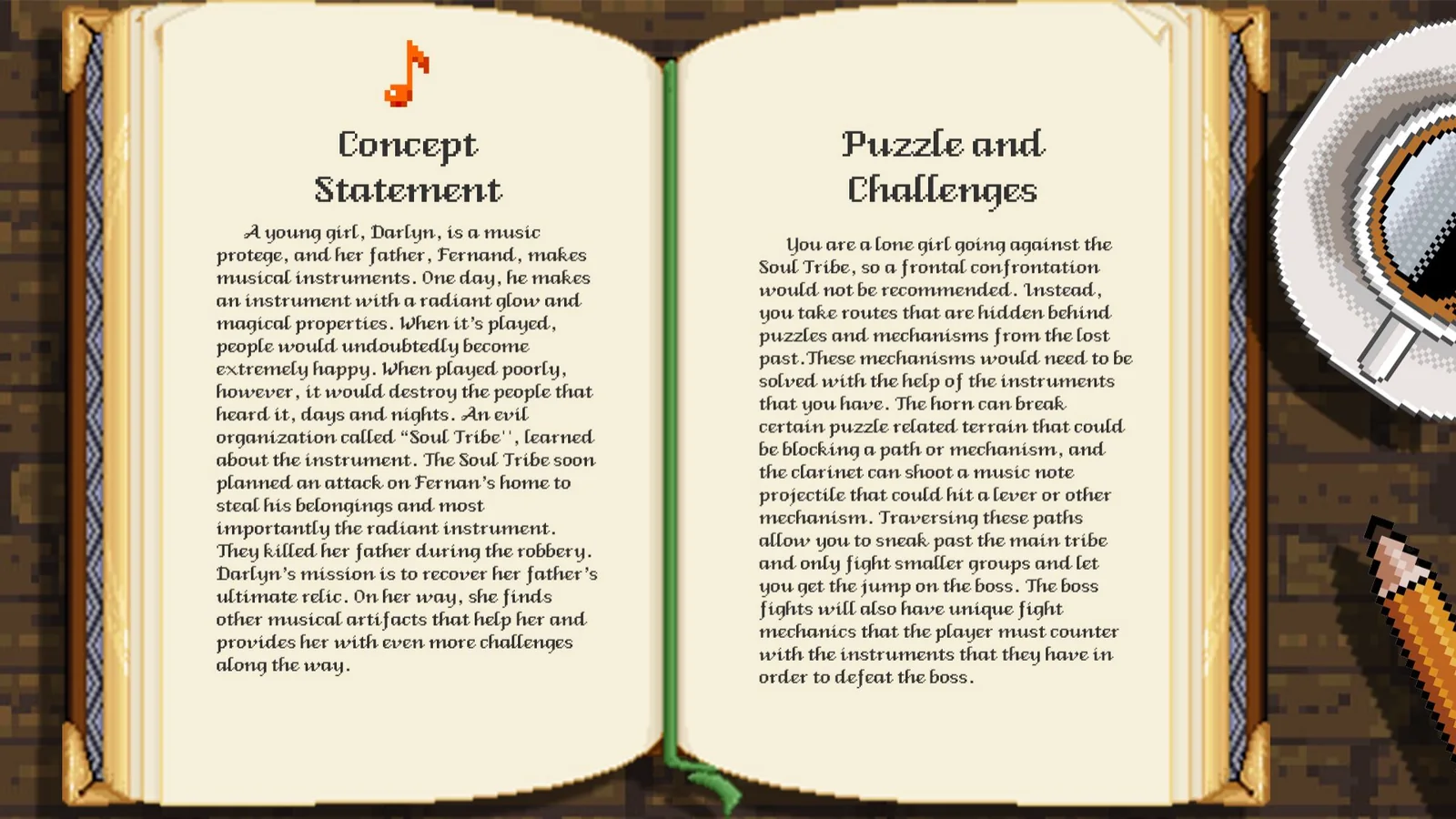
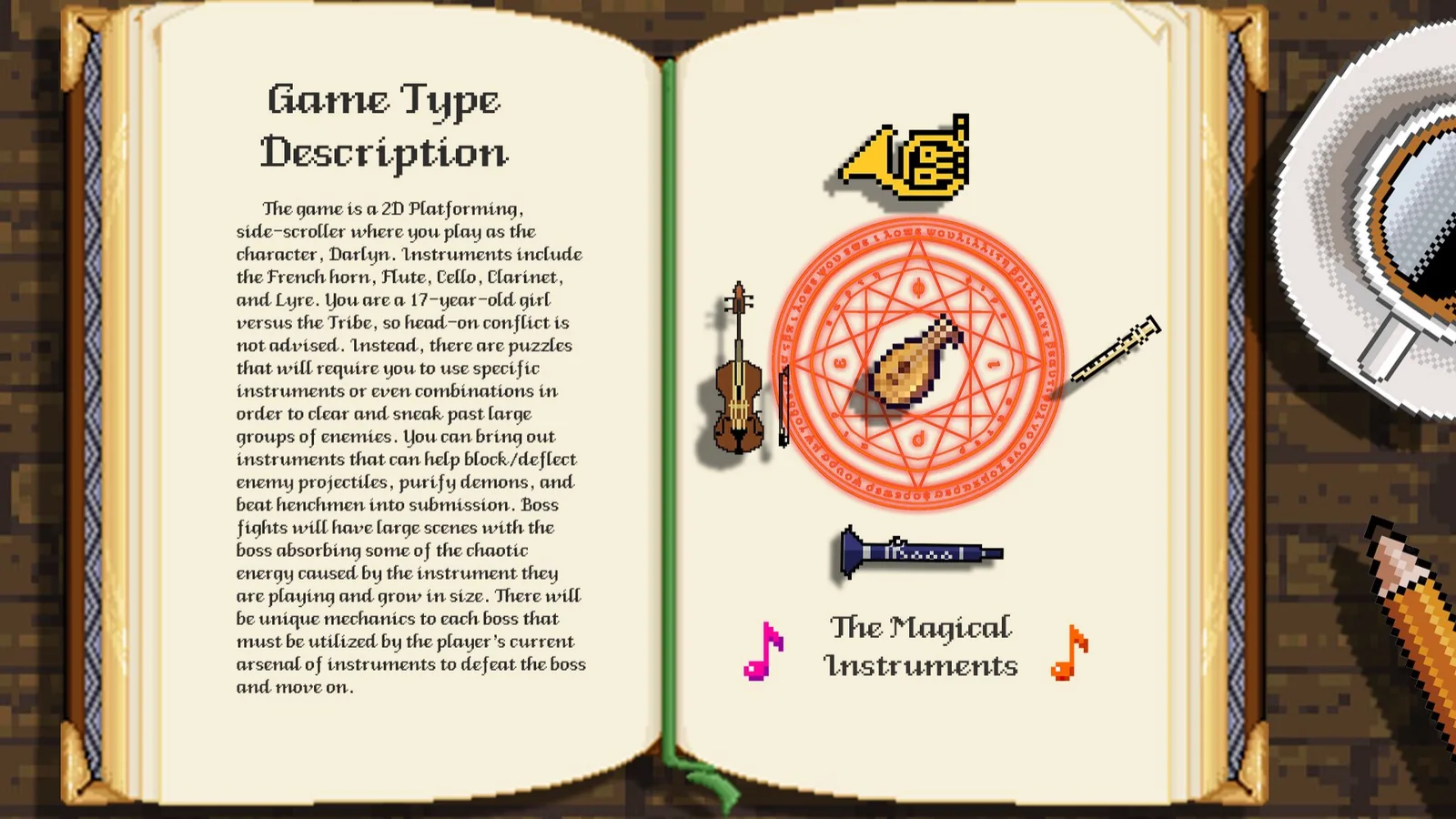
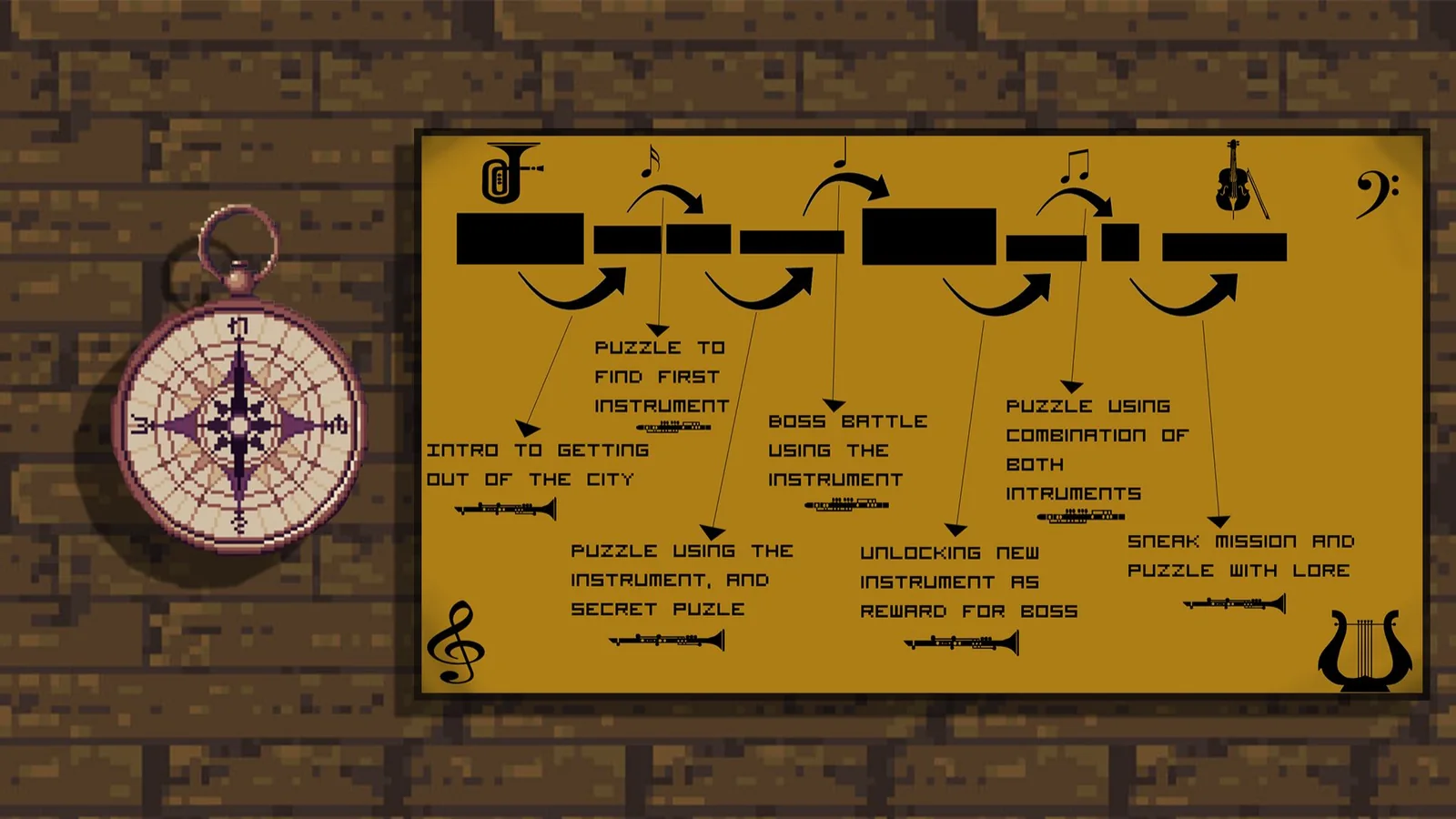
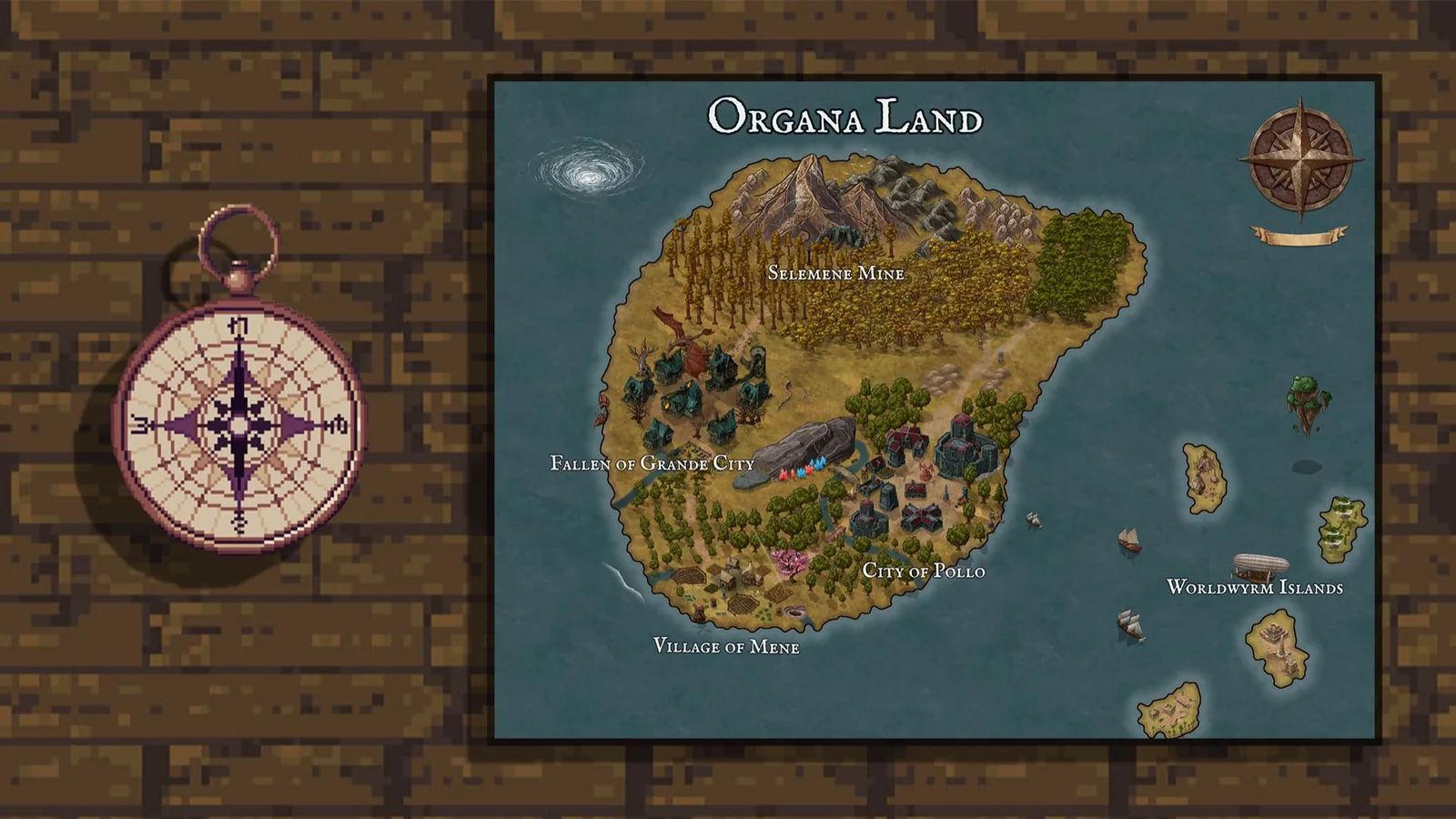
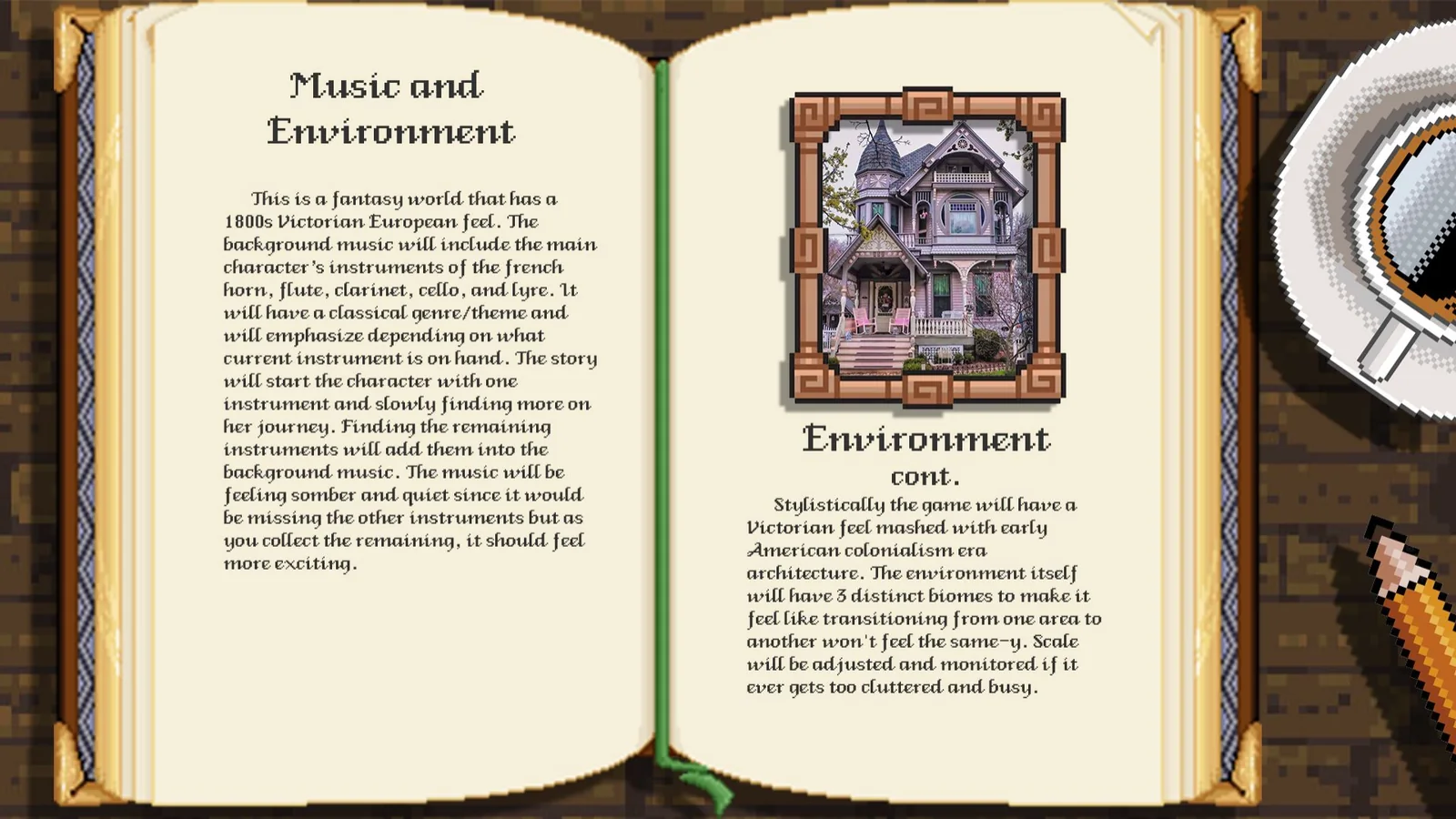
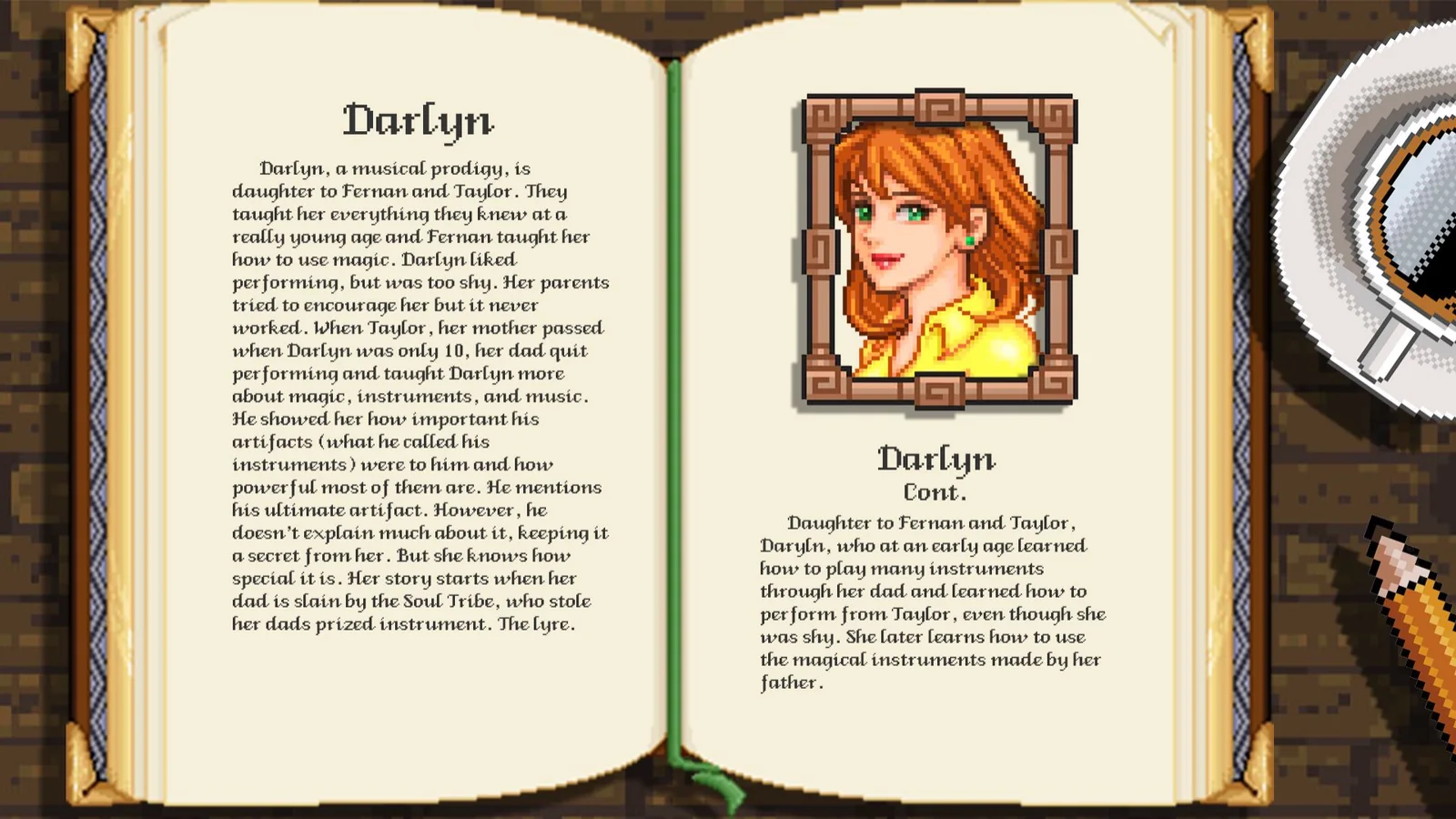
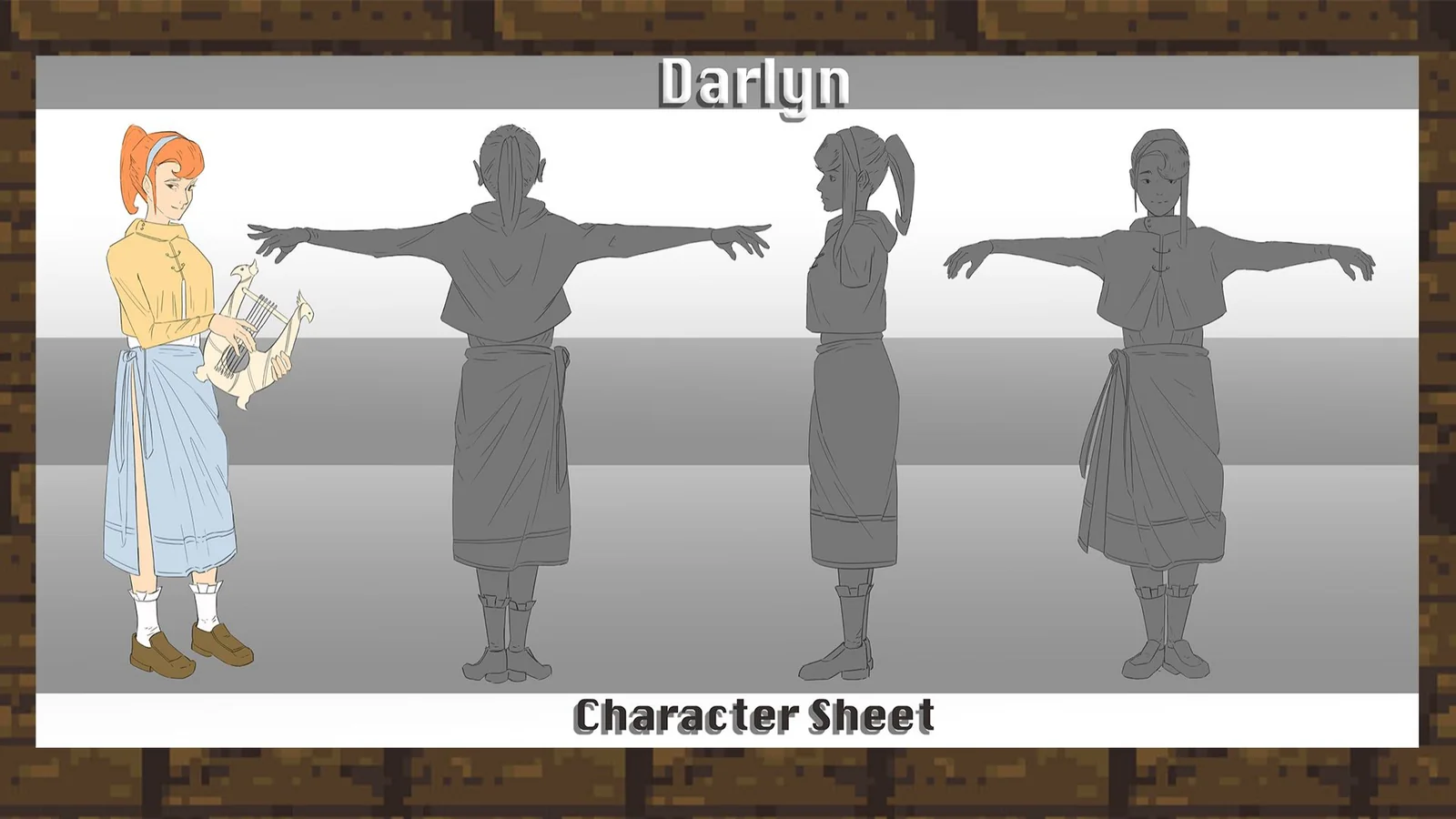
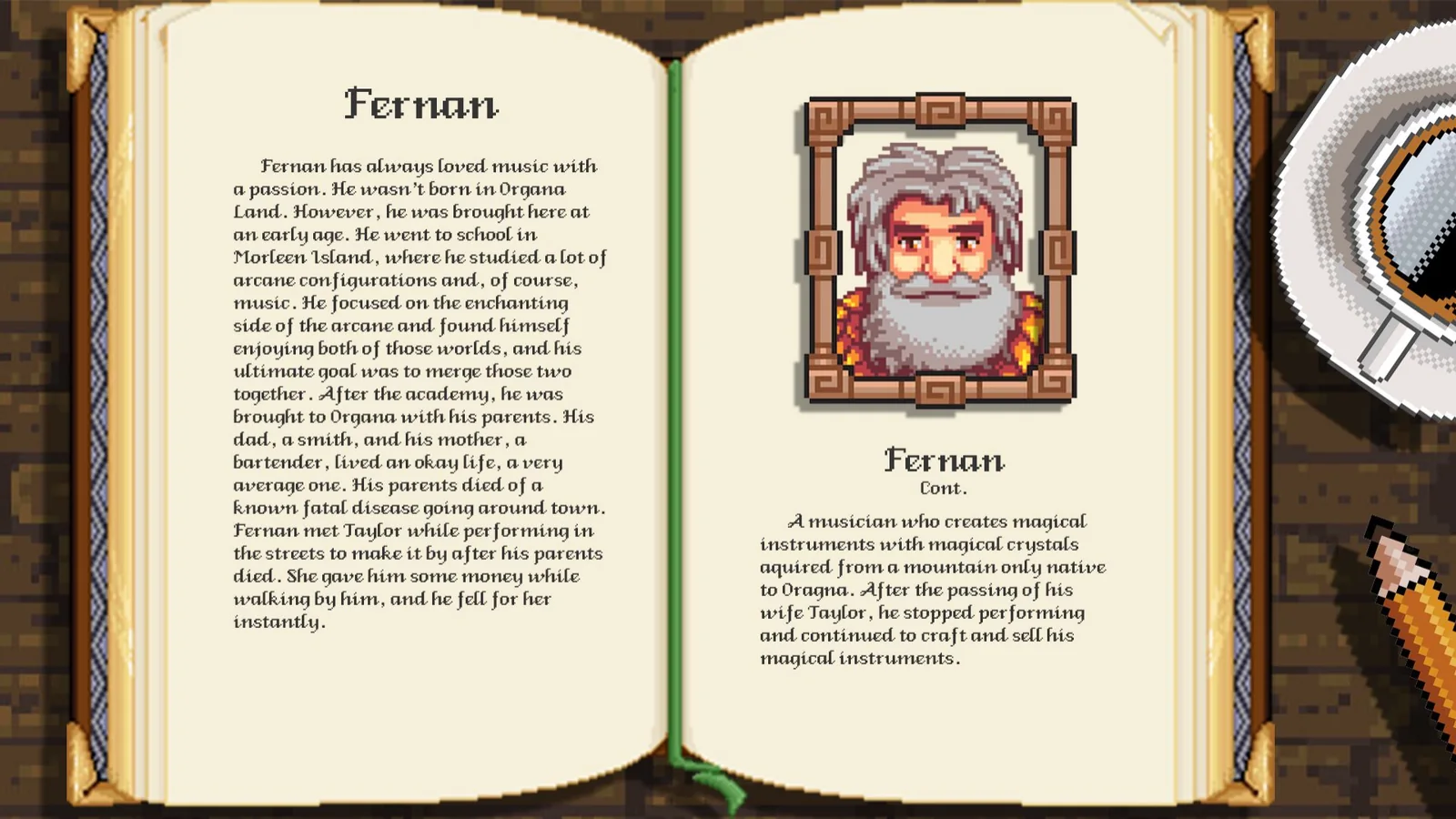
Darlyn, a young musician, sets out to recover her late father’s magical instruments from the Soul Tribe. Each instrument is a tool: the horn breaks terrain, and the clarinet fires notes at levers. I led story, sound and music, character design, and level design.
Sound as a mechanicEvery instrument Darlyn recovers is both a new ability and a new voice in the soundtrack, so the score grows as the player does and the music always tells you how far you’ve come.
Press play for six minutes of gameplay with my music, then flip through our studio pitch: the level flow, the map of Organa Land (the same world as my tabletop RPG), and the characters.
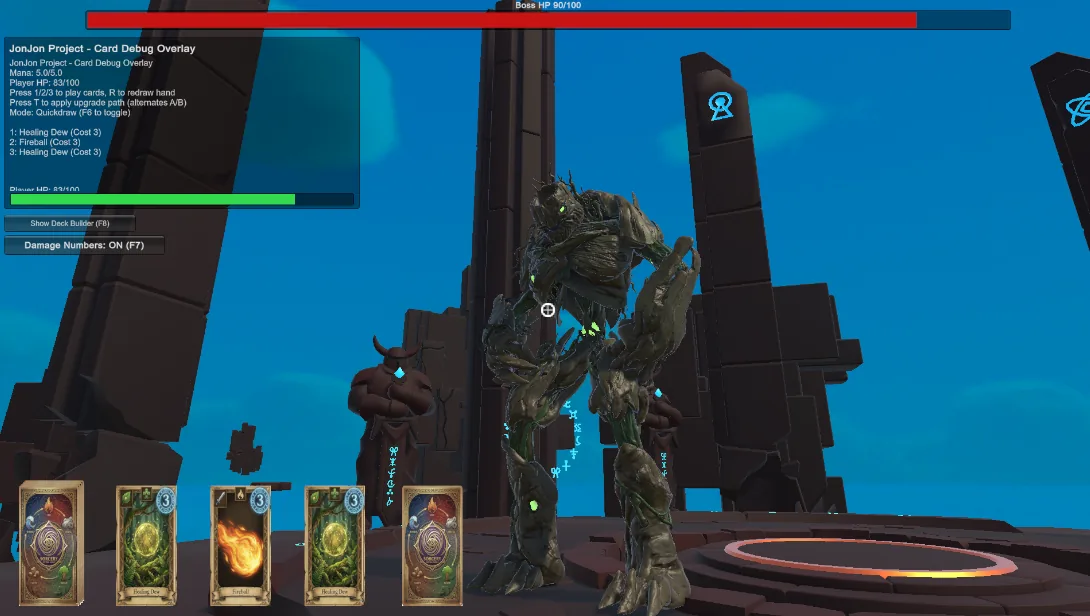
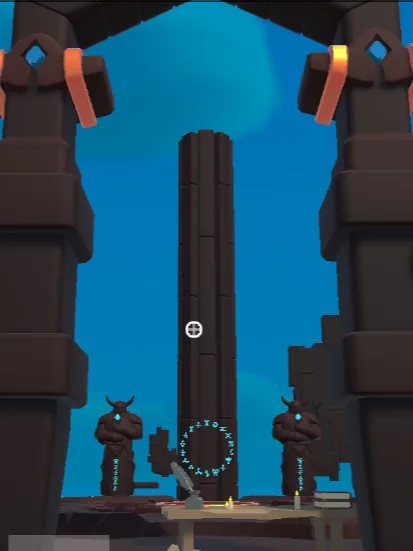
My current project: a real-time strategy adventure built as a roguelite card game. It’s where my systems work lives right now, from the deck and run structure to how real-time pressure changes the way cards get played.
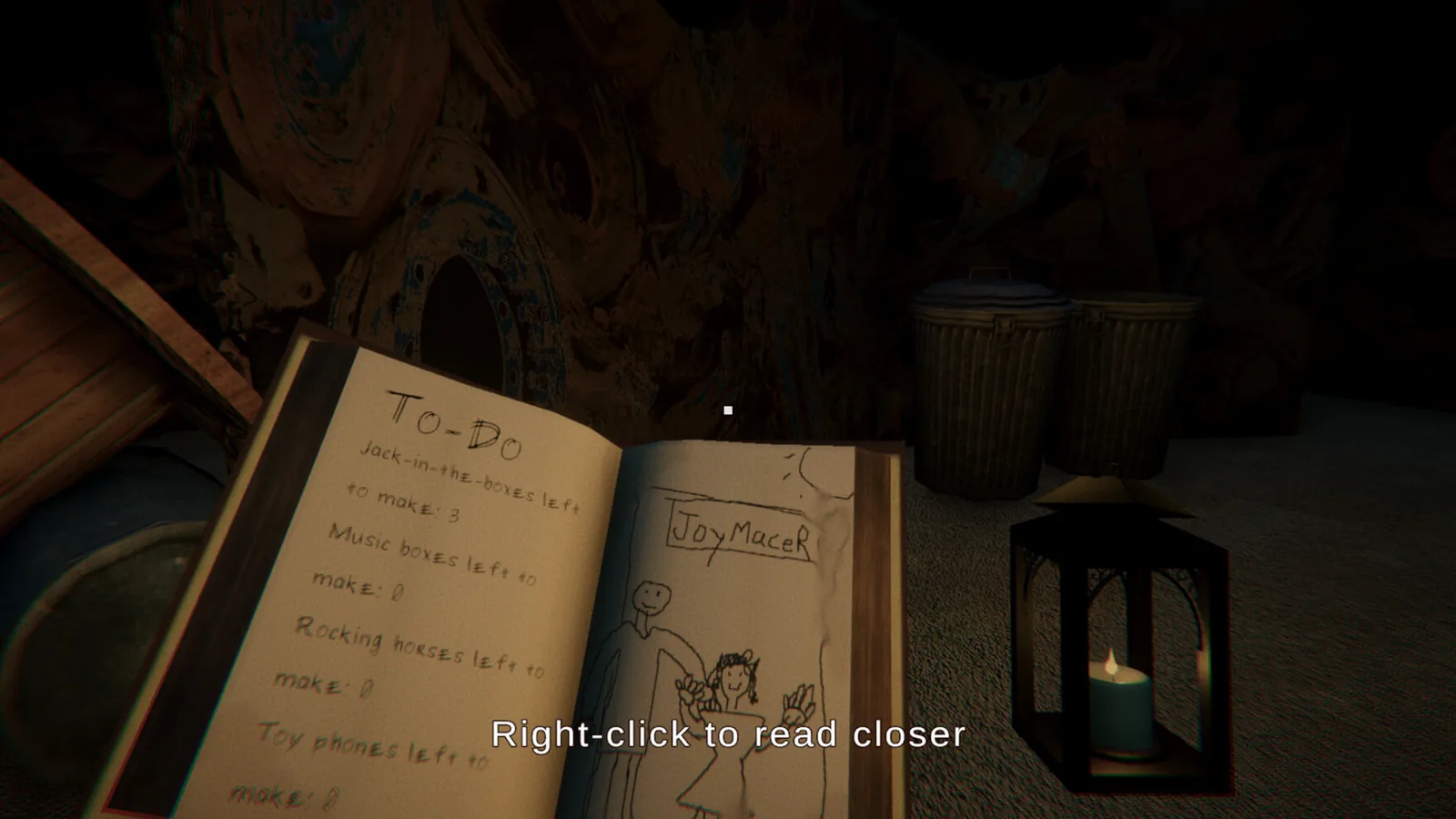
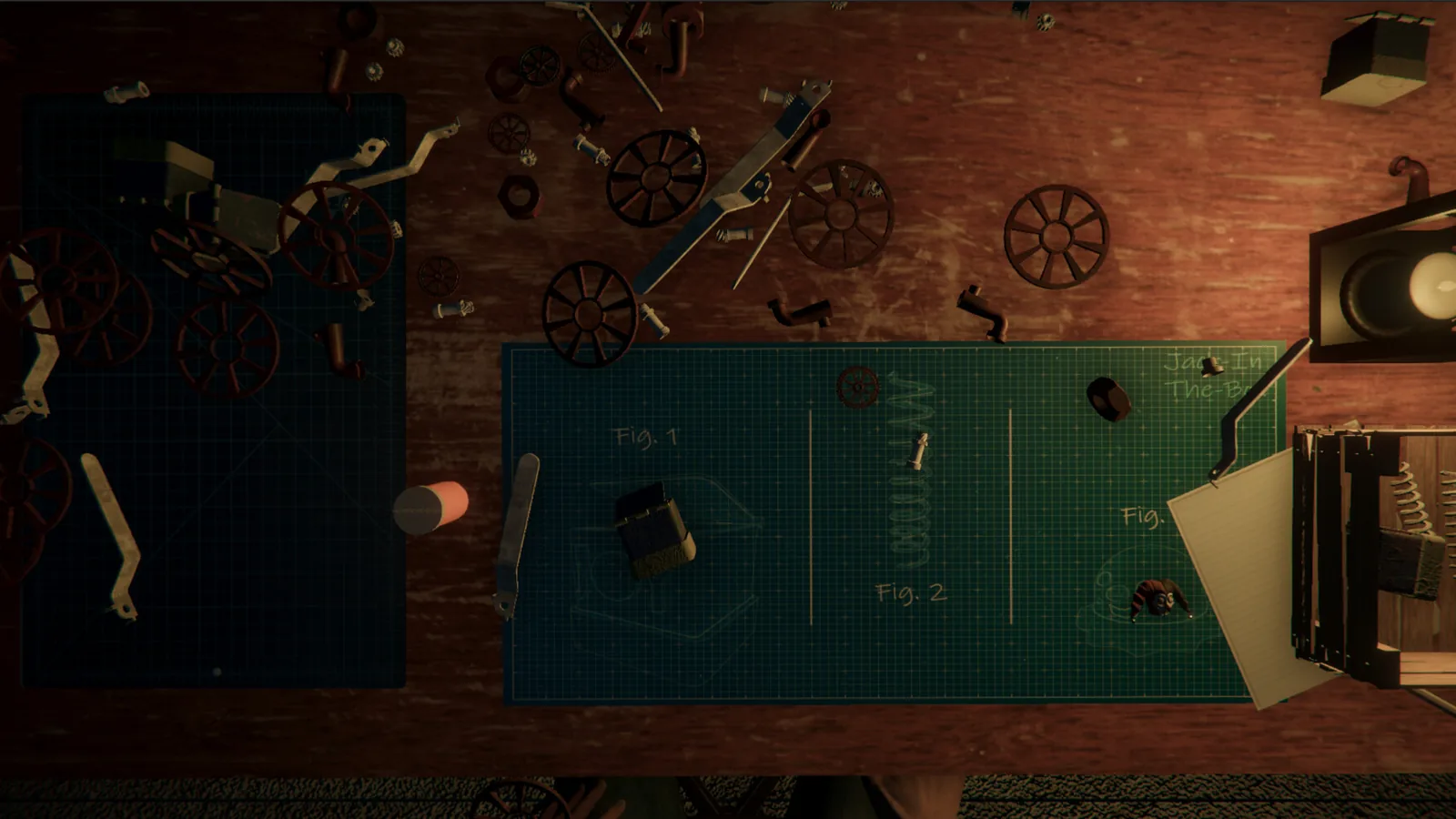
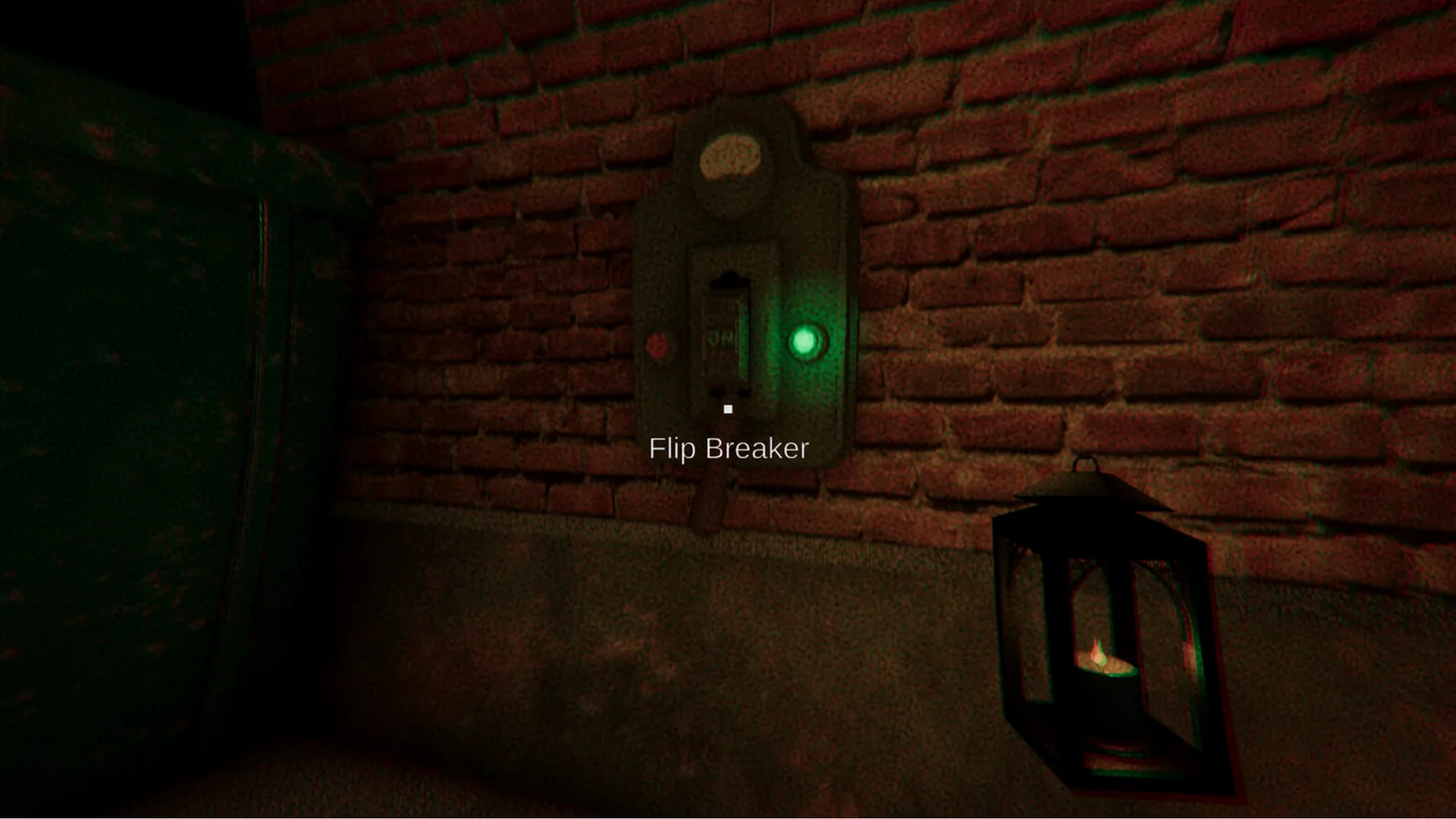
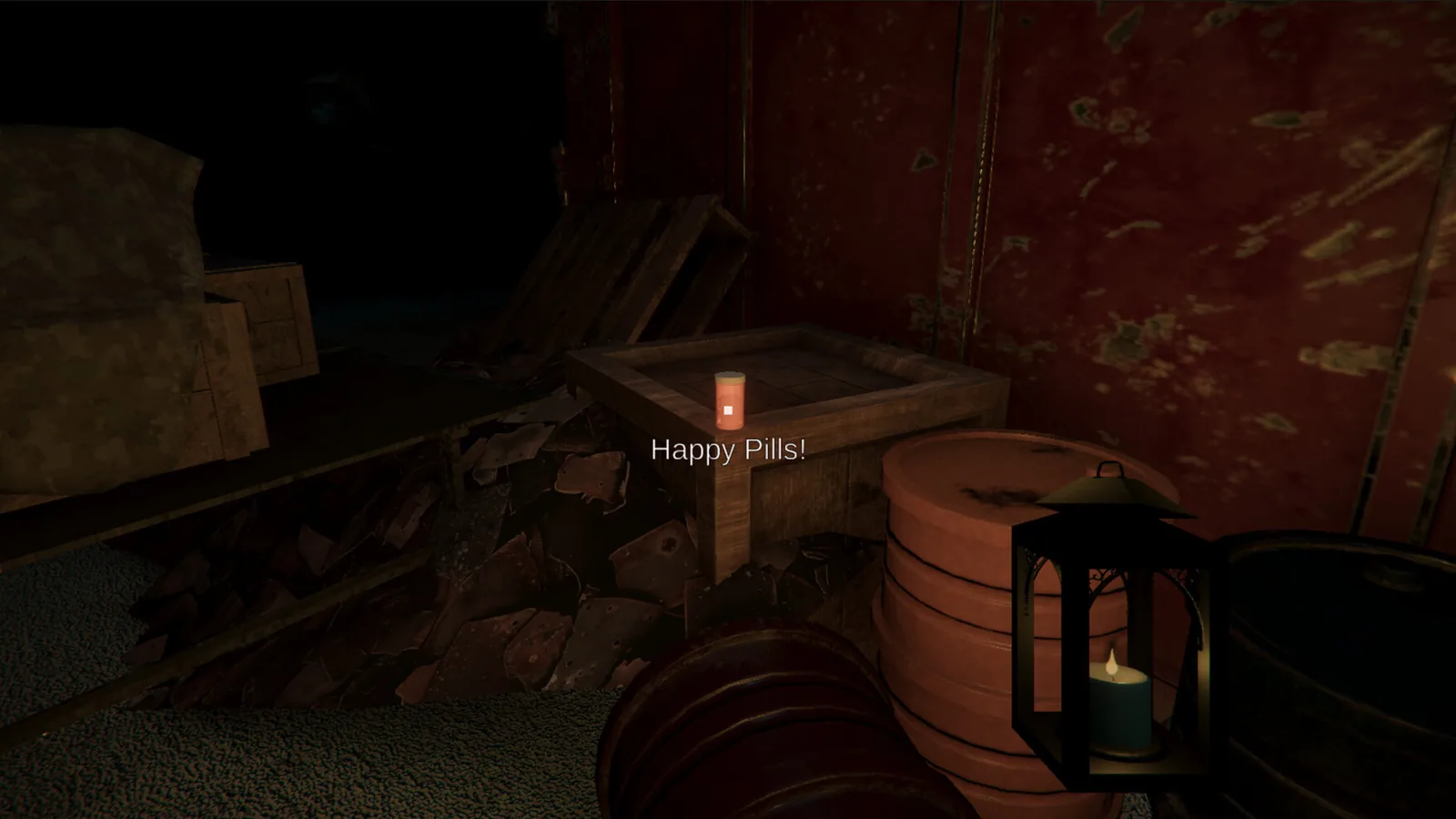
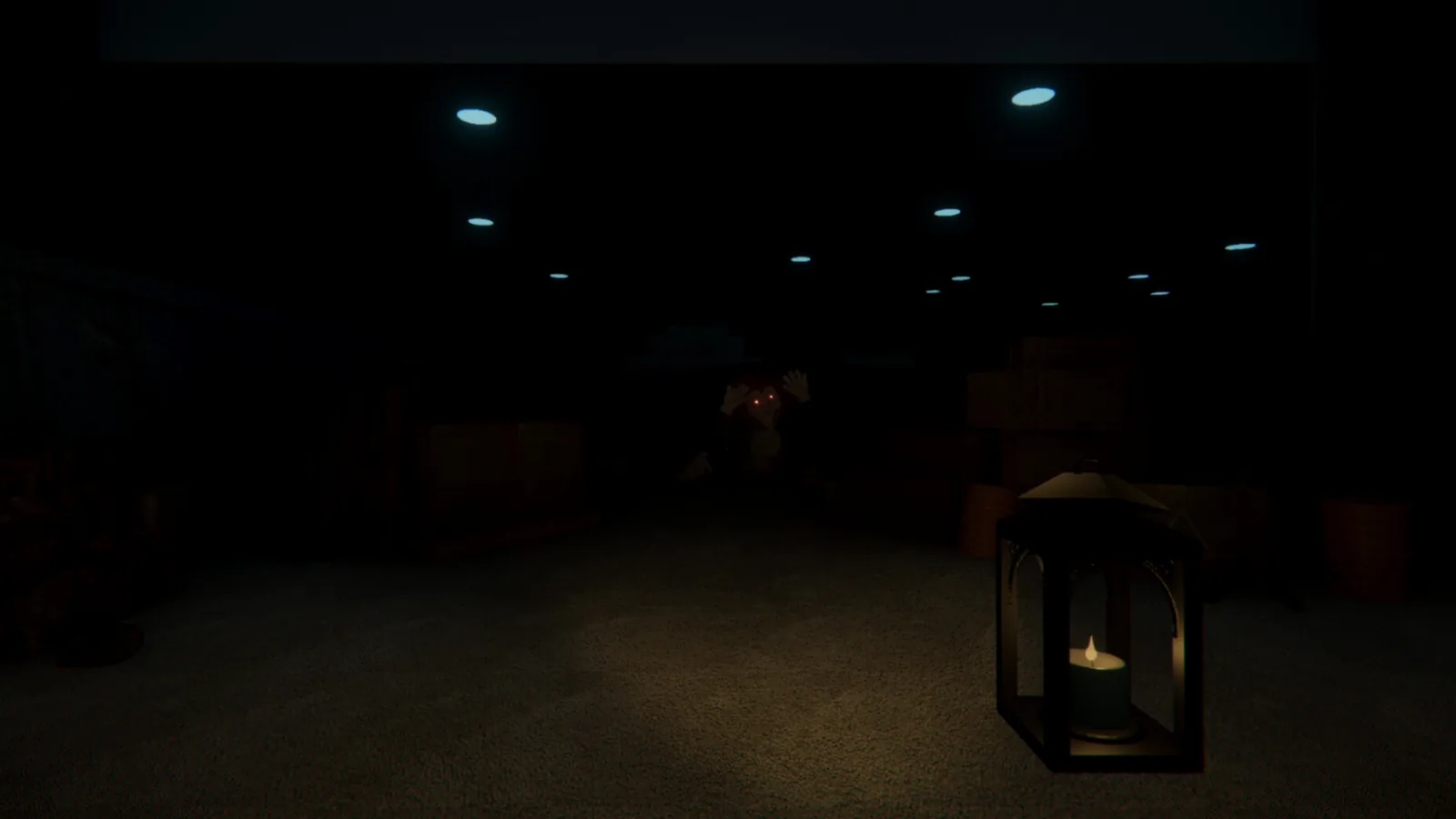
A story-driven psychological horror game set in an abandoned toy factory, released on Steam in November 2025. I made the music and sound for its first version, built over a weekend game jam.
Design goalMake a place built for children feel wrong. Playful, childlike themes like the carousel tune get distorted until the comfort turns uneasy, while footsteps, dark ambience, and rain keep the empty factory alive around the player.
Screenshots are of the released game, from its Steam page.
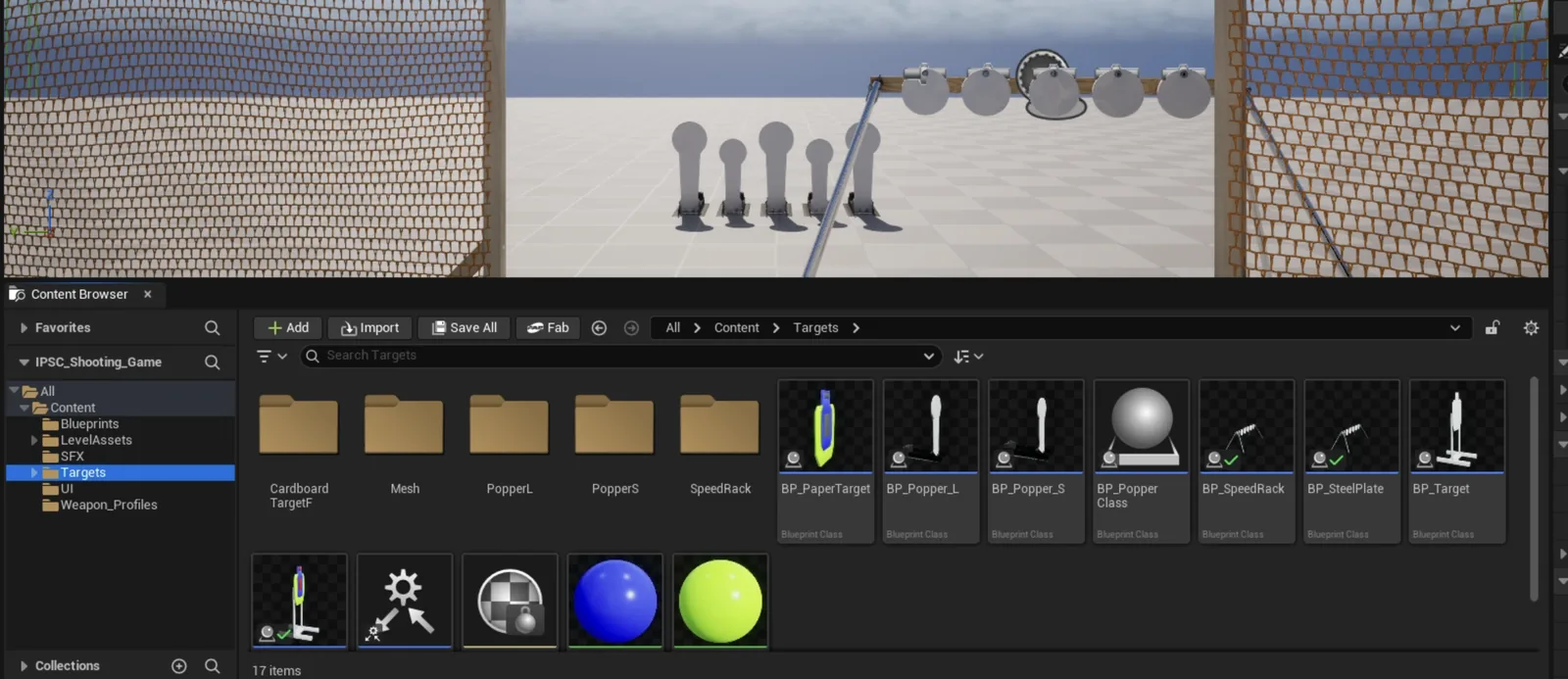
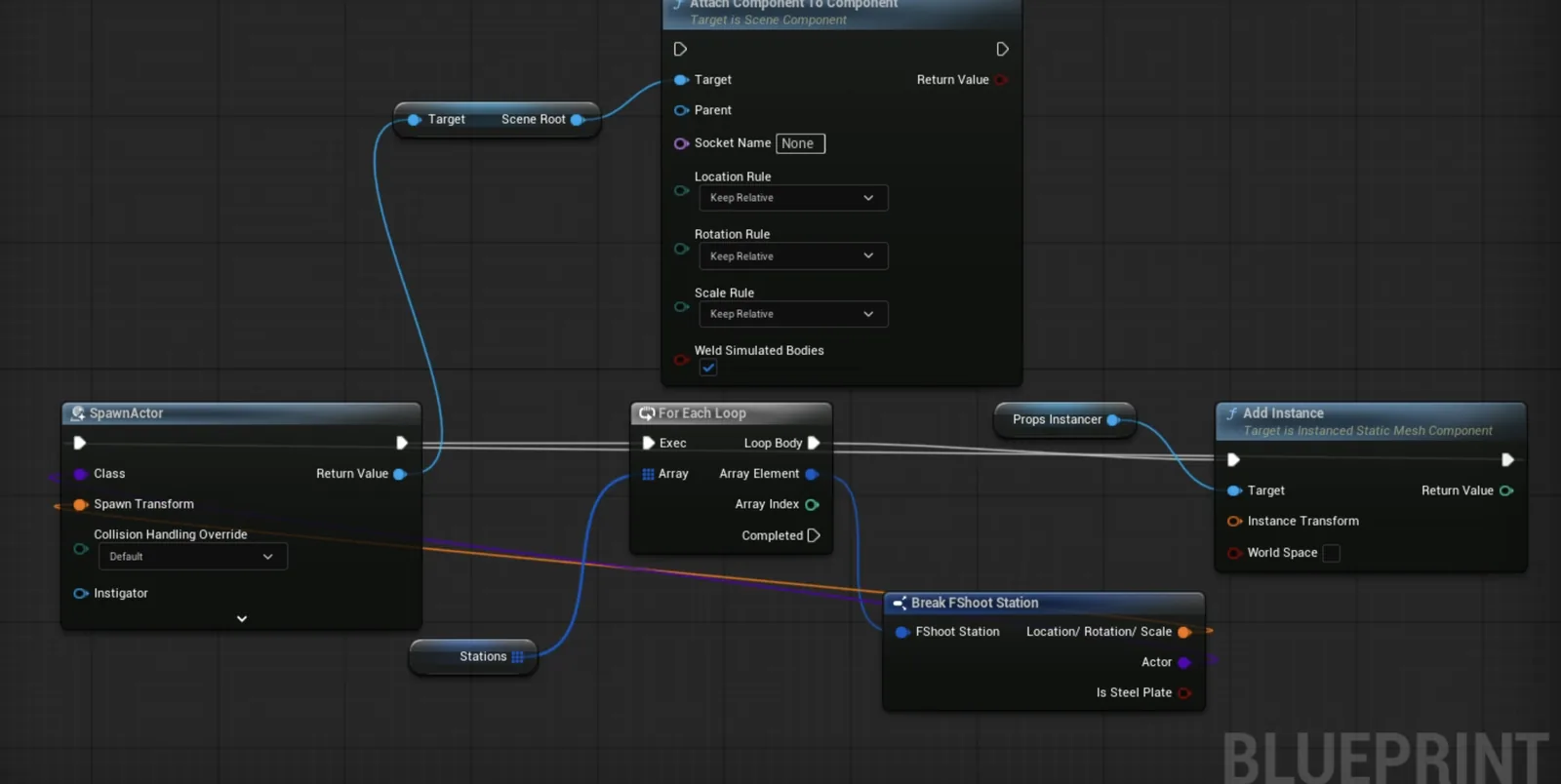
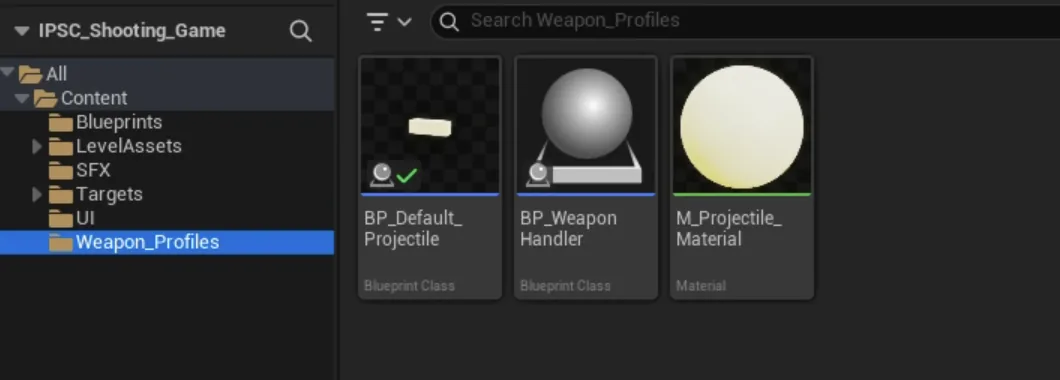
A practical-shooting range game in Unreal Engine 5, with steel and plate targets that react to hits, weapon profiles, and projectile Blueprints. I worked on the weapon and target systems and made the sound effects and a rock soundtrack.
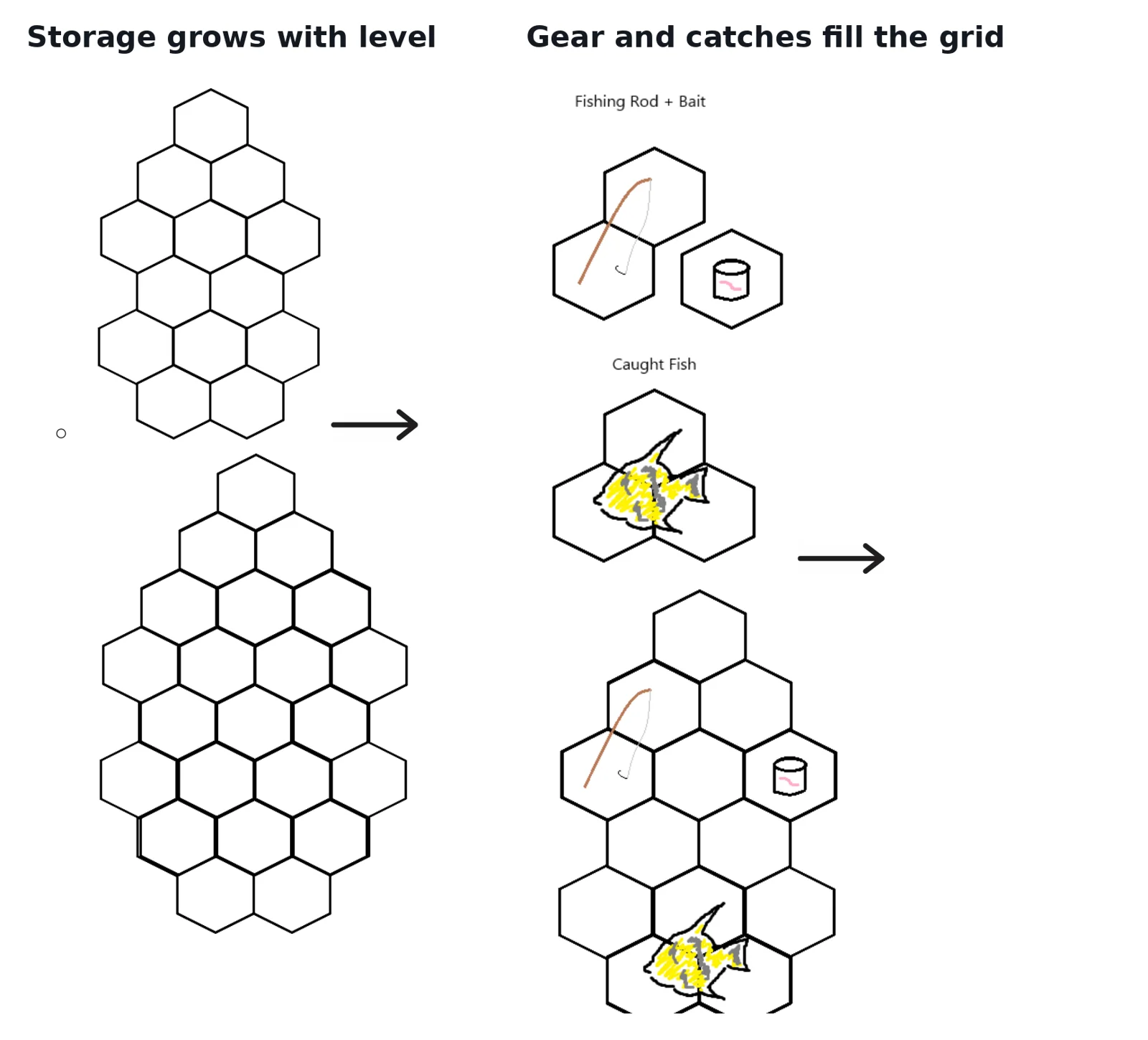
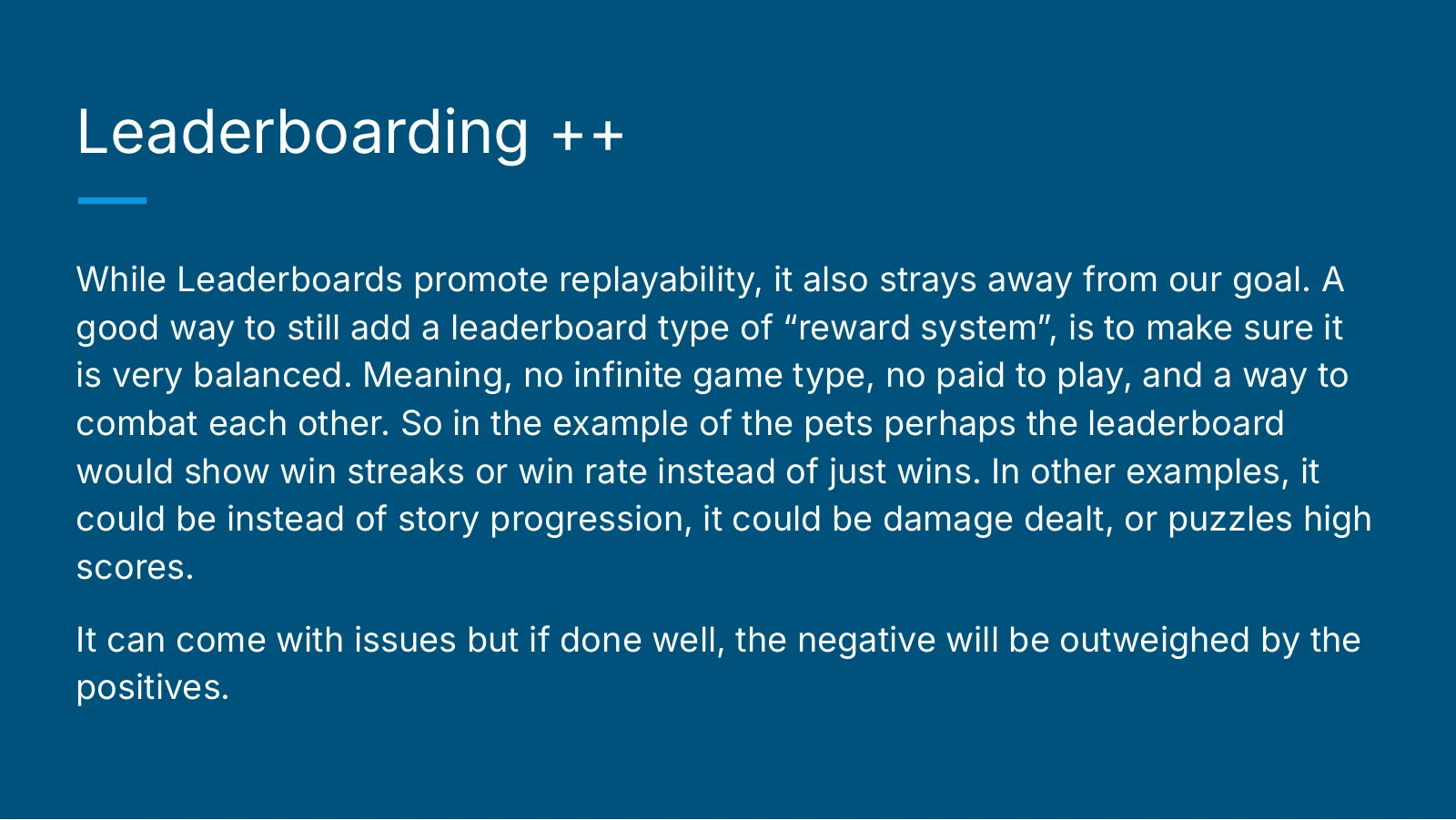
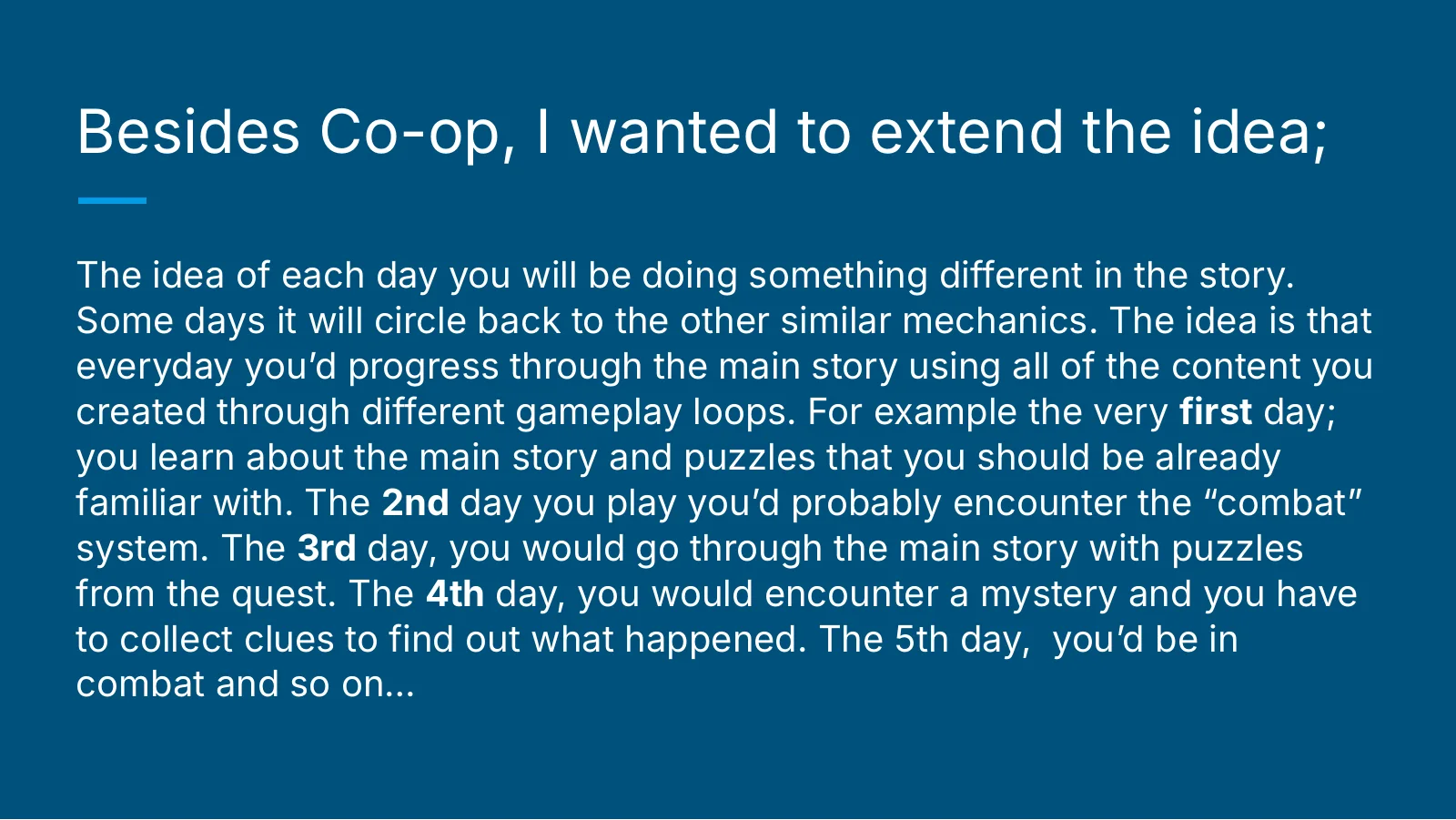
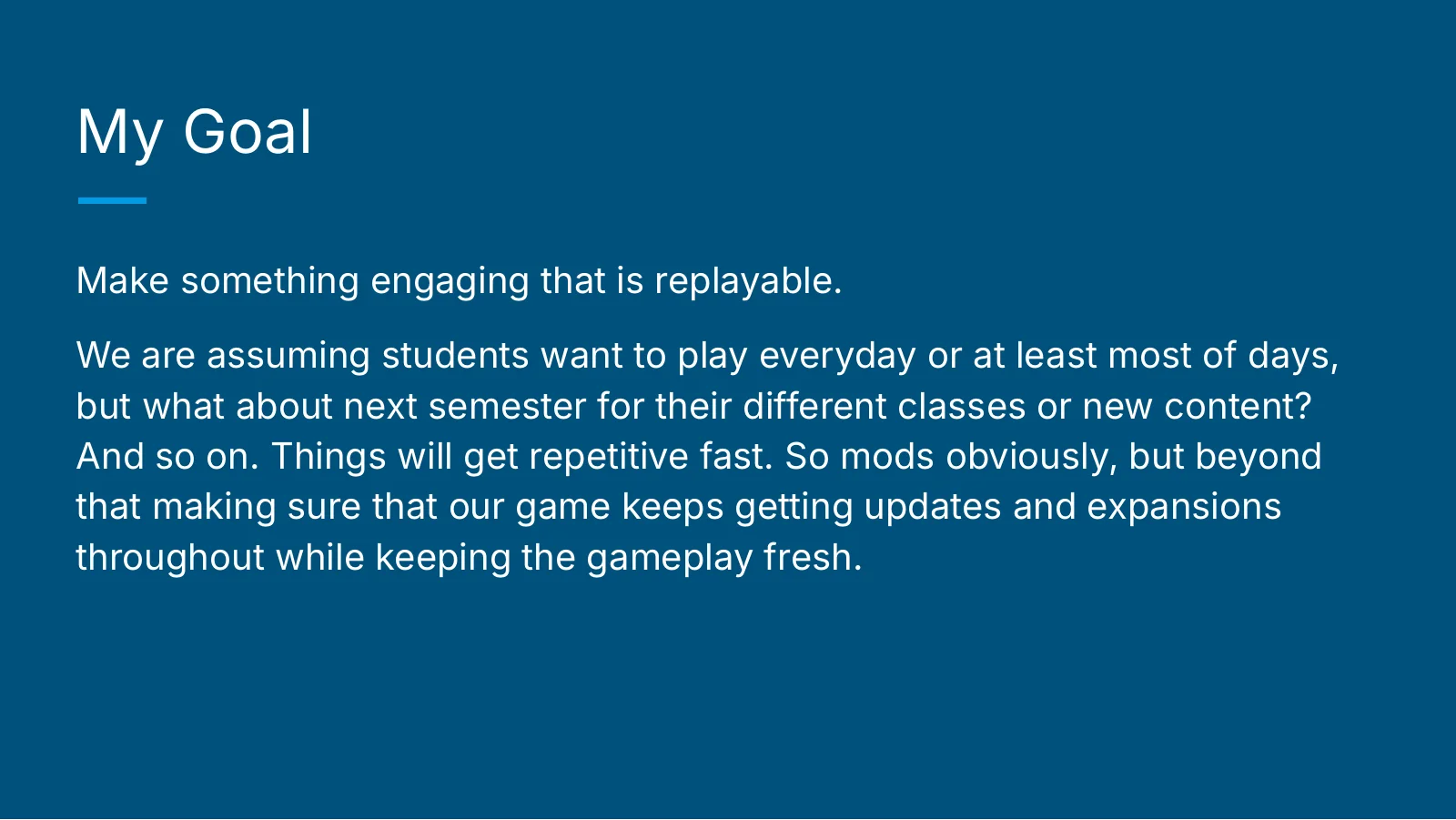
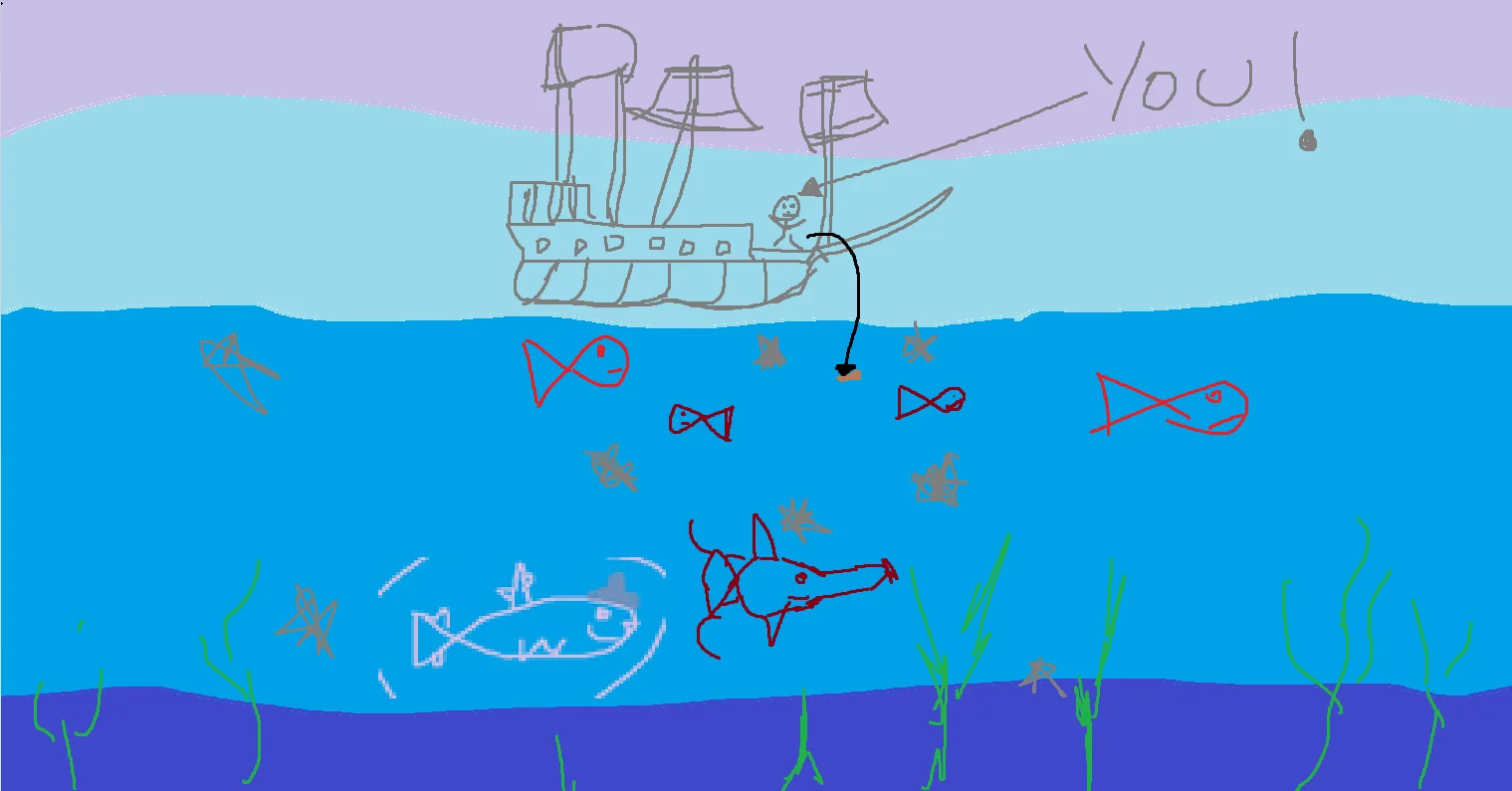
A study game where reviewing flashcards earns the time and gear to run a cozy aquarium and go on roguelite fishing expeditions. As designer and producer, I scoped the fishing MVP with a must/should/could/won’t cut list, designed the reel-in mechanic, and pitched how leaderboards, co-op, and a daily story could keep students coming back without pulling them away from learning.
The reel-in mechanicOnce a fish bites, you pull to add tension and steer left or right against it. Early fish only need pulling; later expeditions make you juggle all three while the fish darts around.
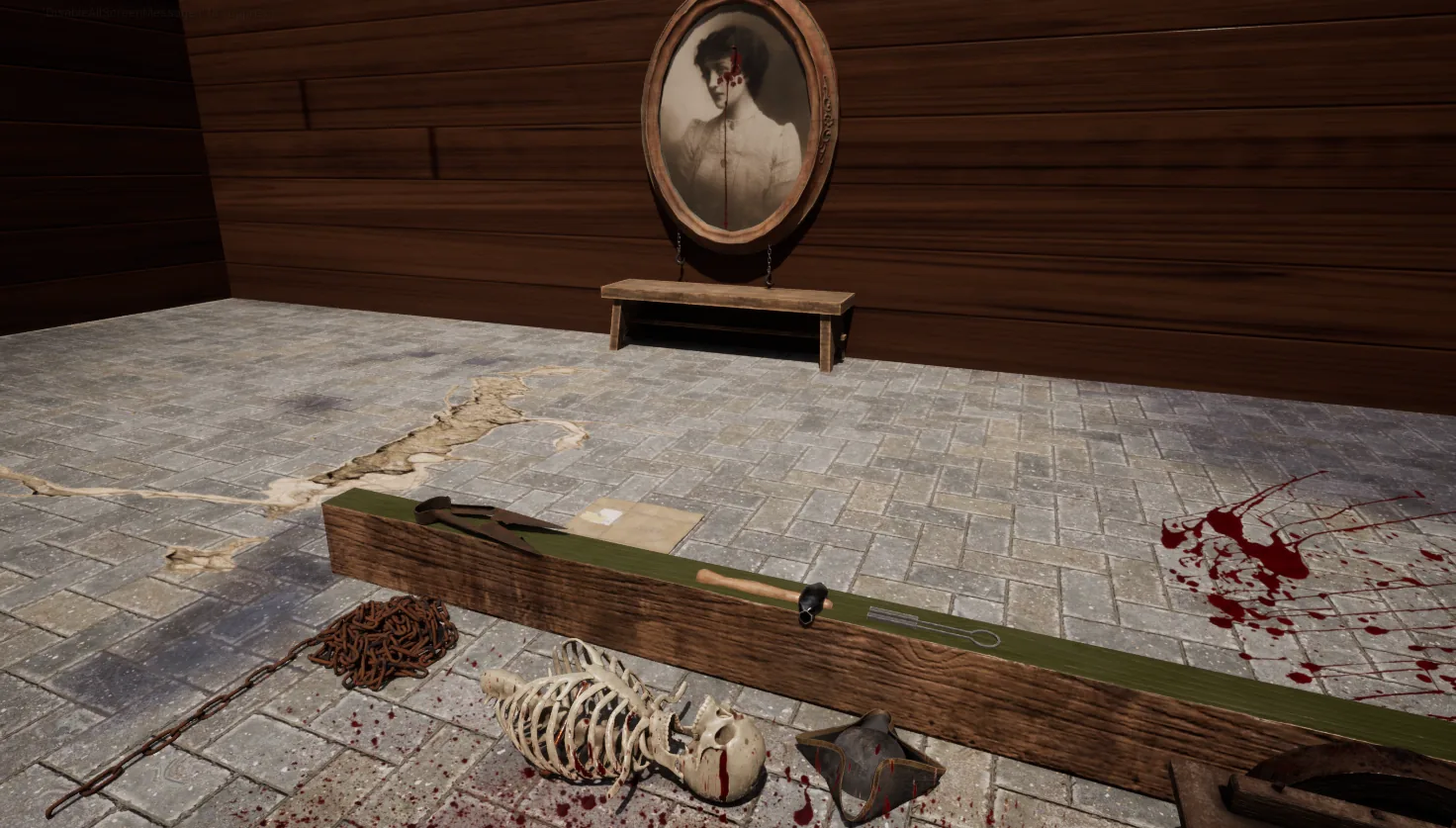
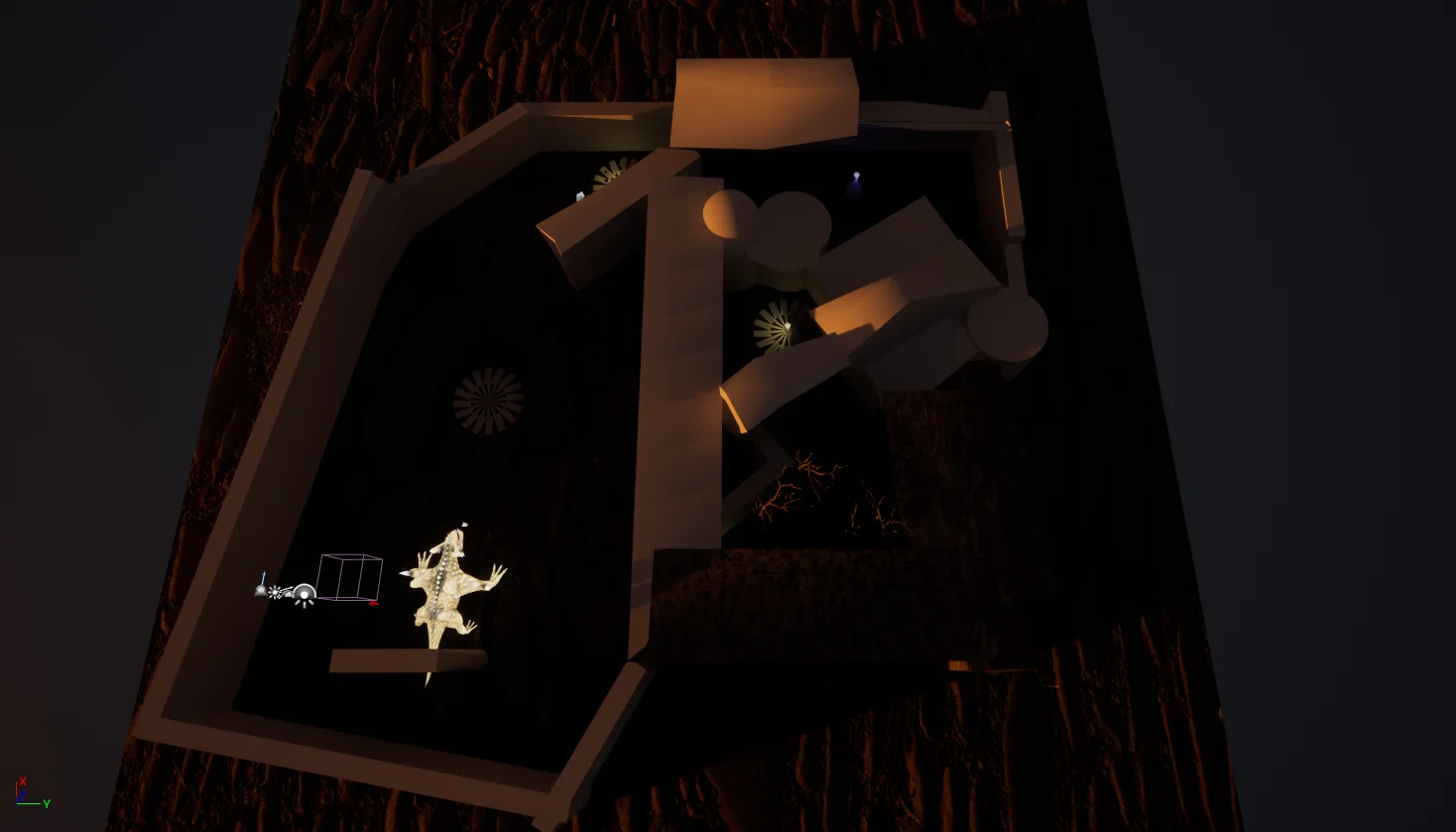
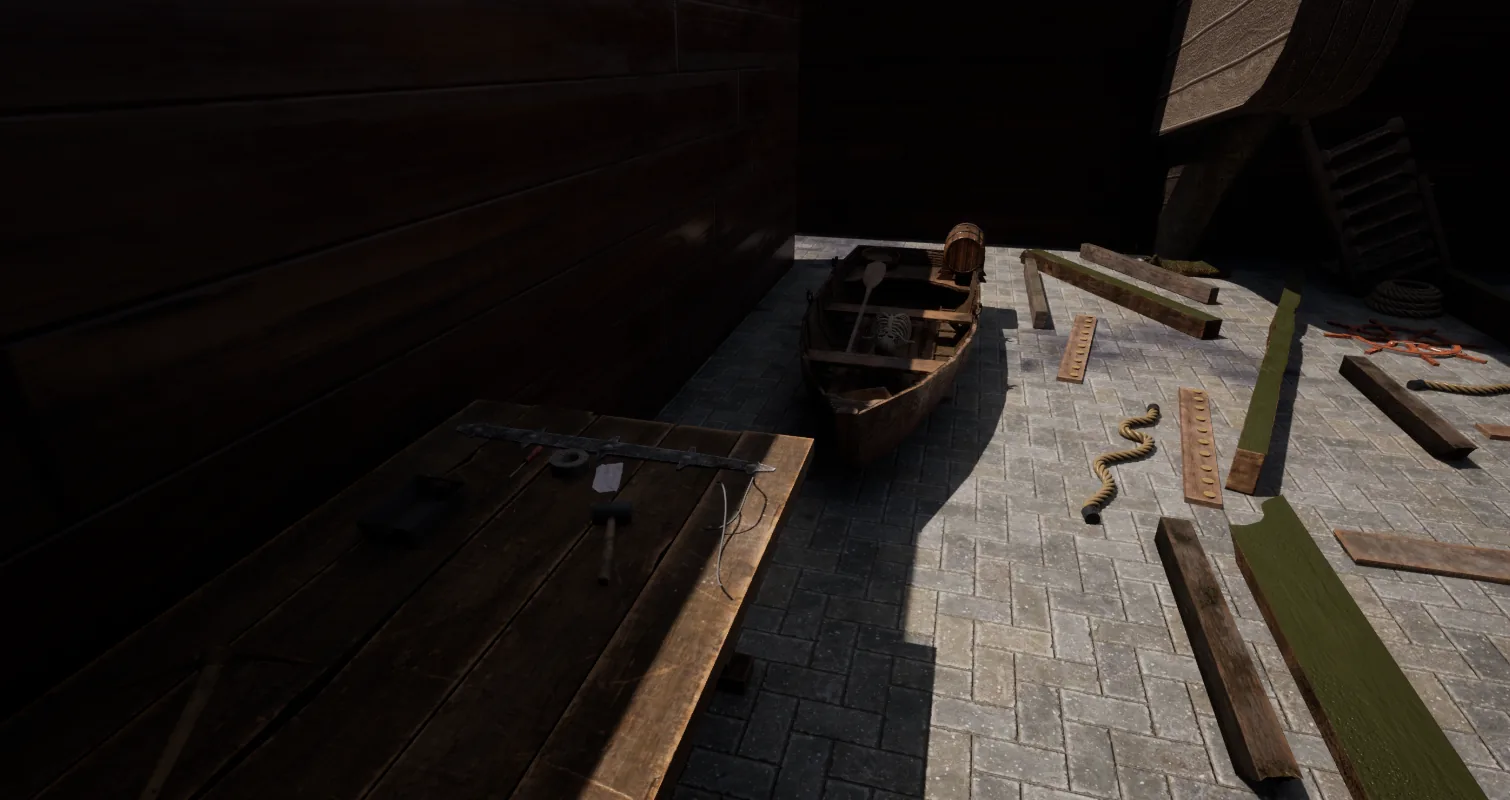
A dark pirate action RPG. Vanessa Wyve grew up poor, learned to out-fish and out-smart the market bosses who cheated her, and became a Robin Hood of the seas. Her home, Gambler’s Groove, has traded a beloved monarchy for a government that hires criminals, while its children are quietly born with strange gifts.
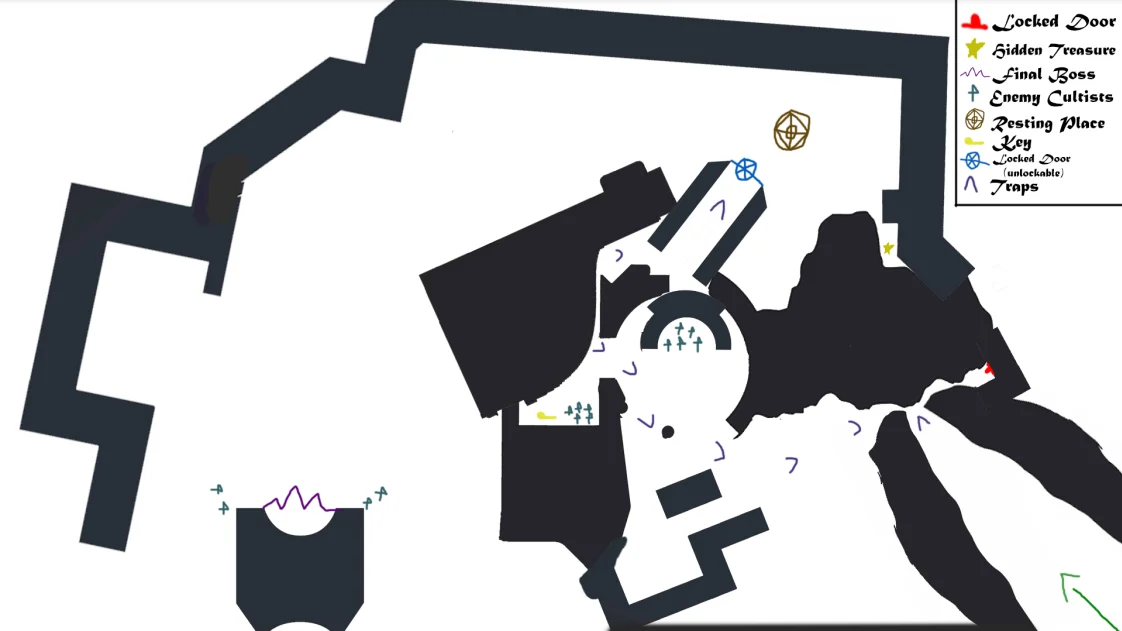
I wrote the design document (high concept, a two-part history of the land, and full profiles of the hero and the antagonist) and blocked out a level with locked doors, traps, cultists, a resting place, and a final boss.
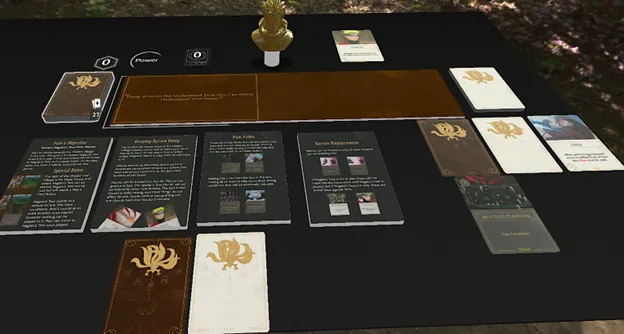
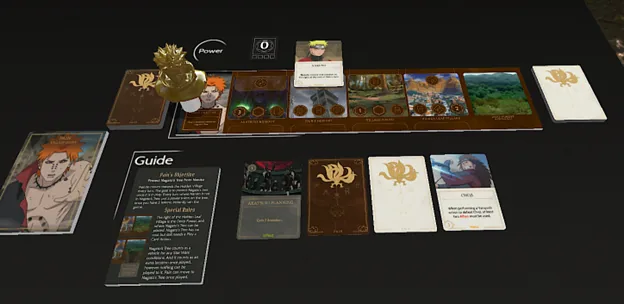
A playable villain for the board game Villainous, built around Pain from Naruto. Apart from the character art taken from the anime, everything is mine: I drew the art, wrote the cards, and designed the deck, its abilities, and its board, then built it so it plays in Tabletop Simulator.
Press play for a walkthrough of the deck and how it plays.
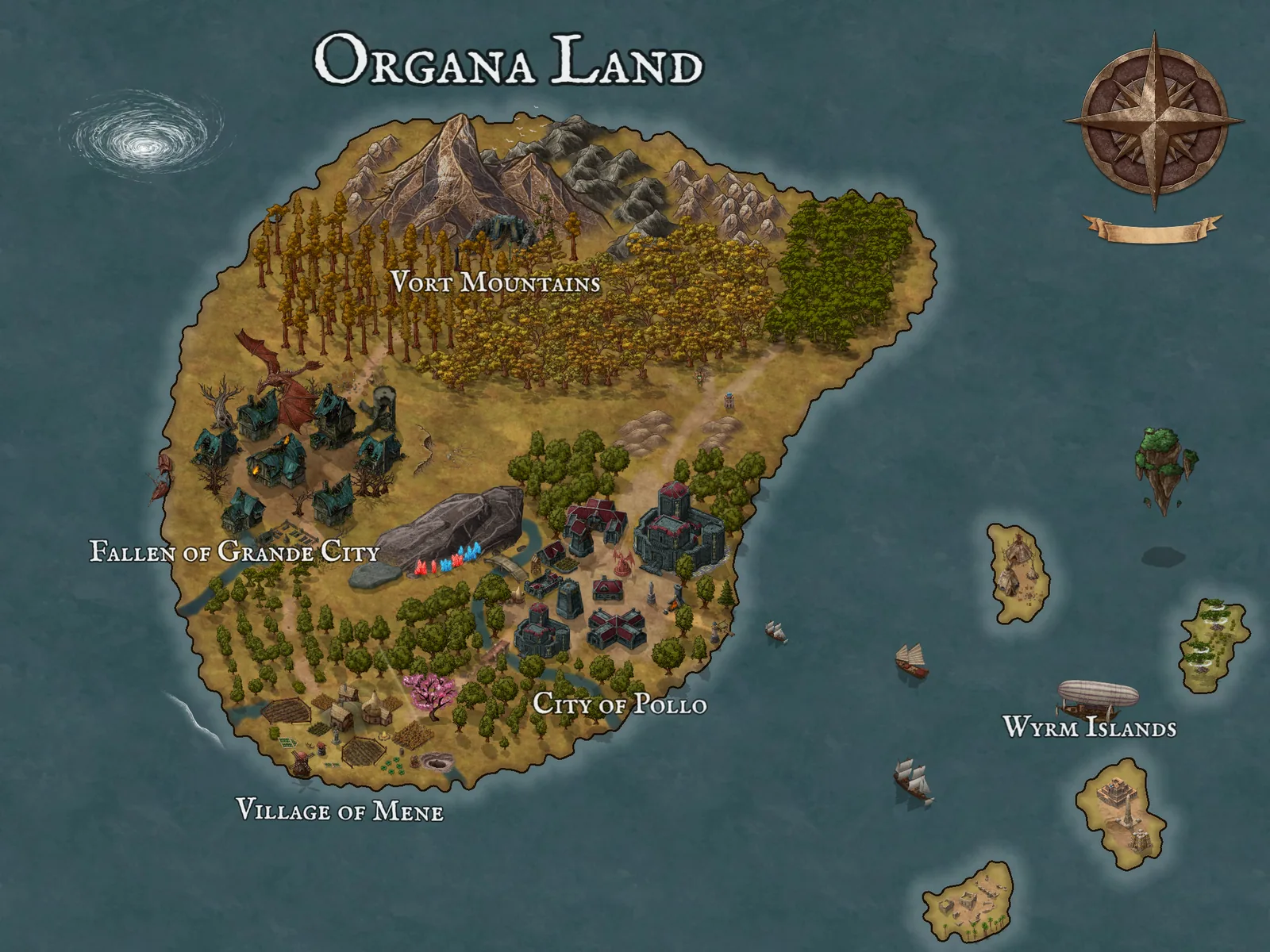
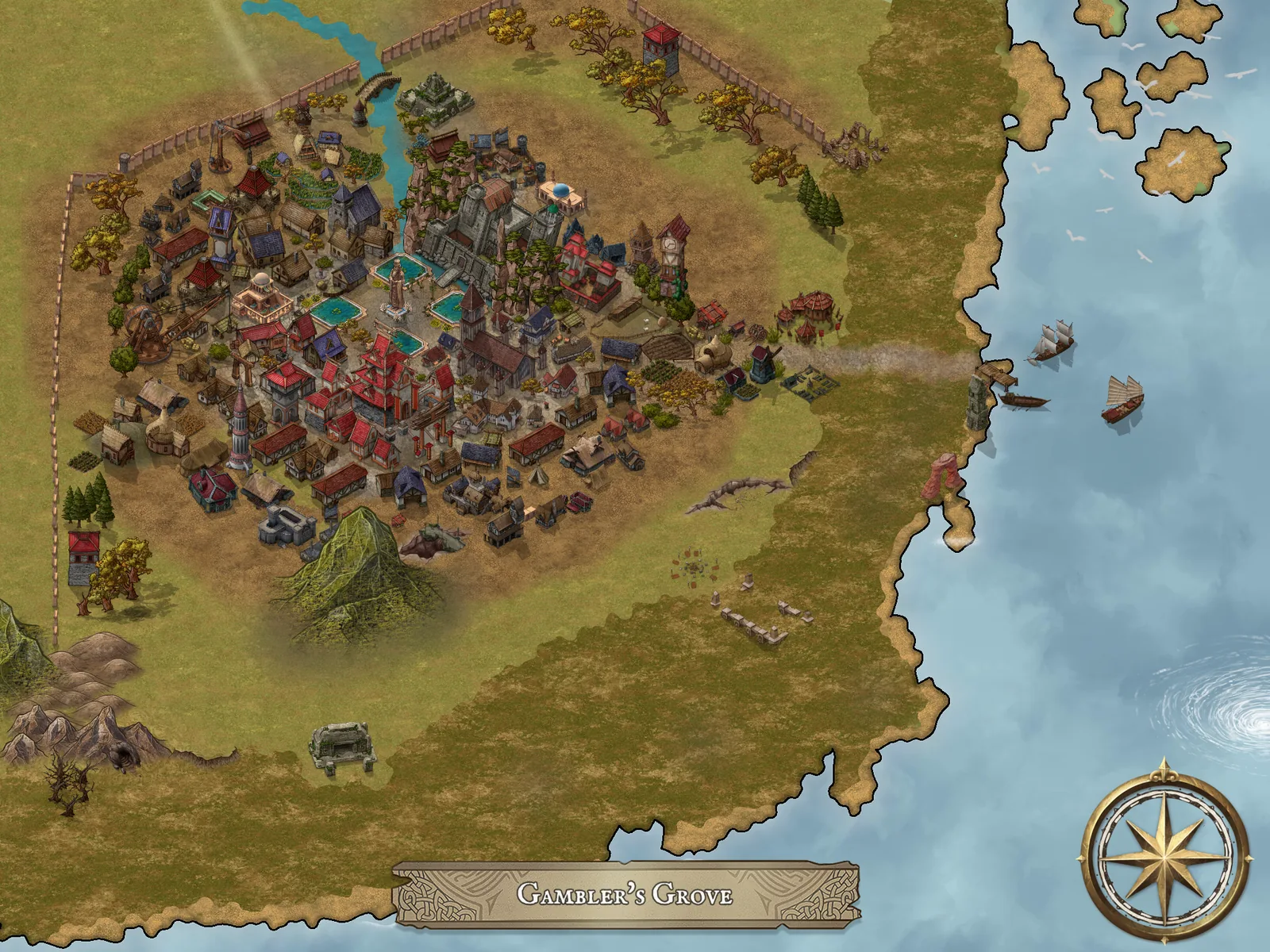
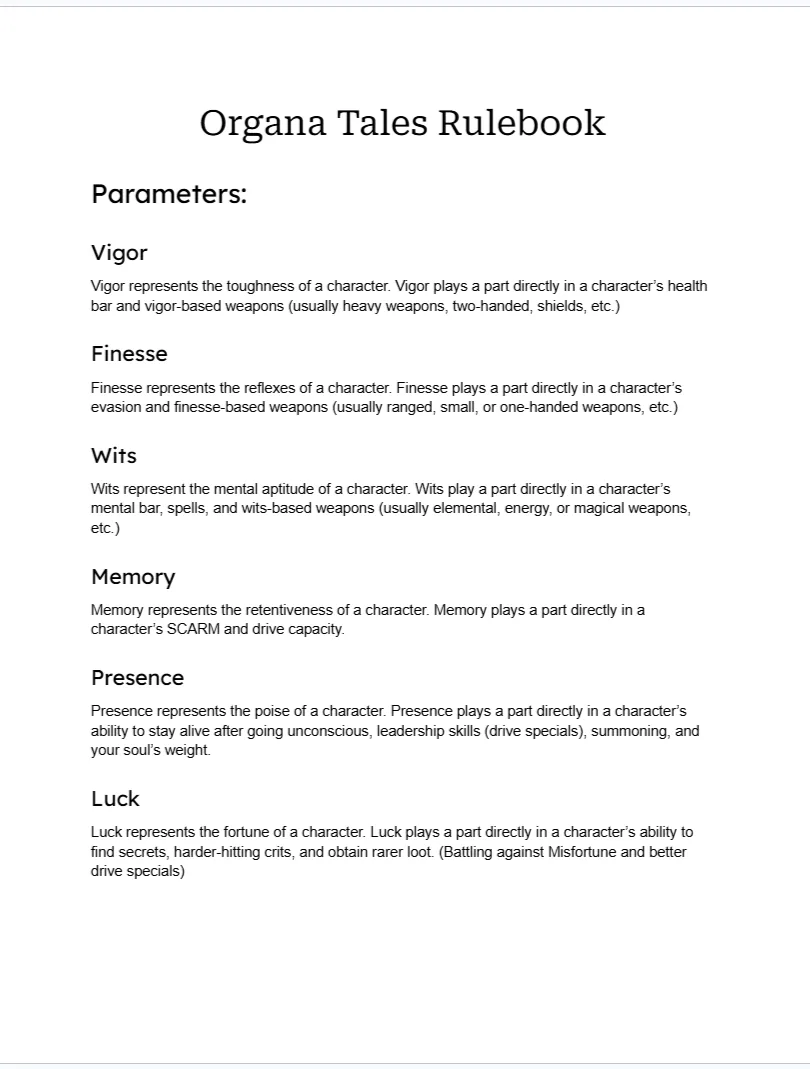
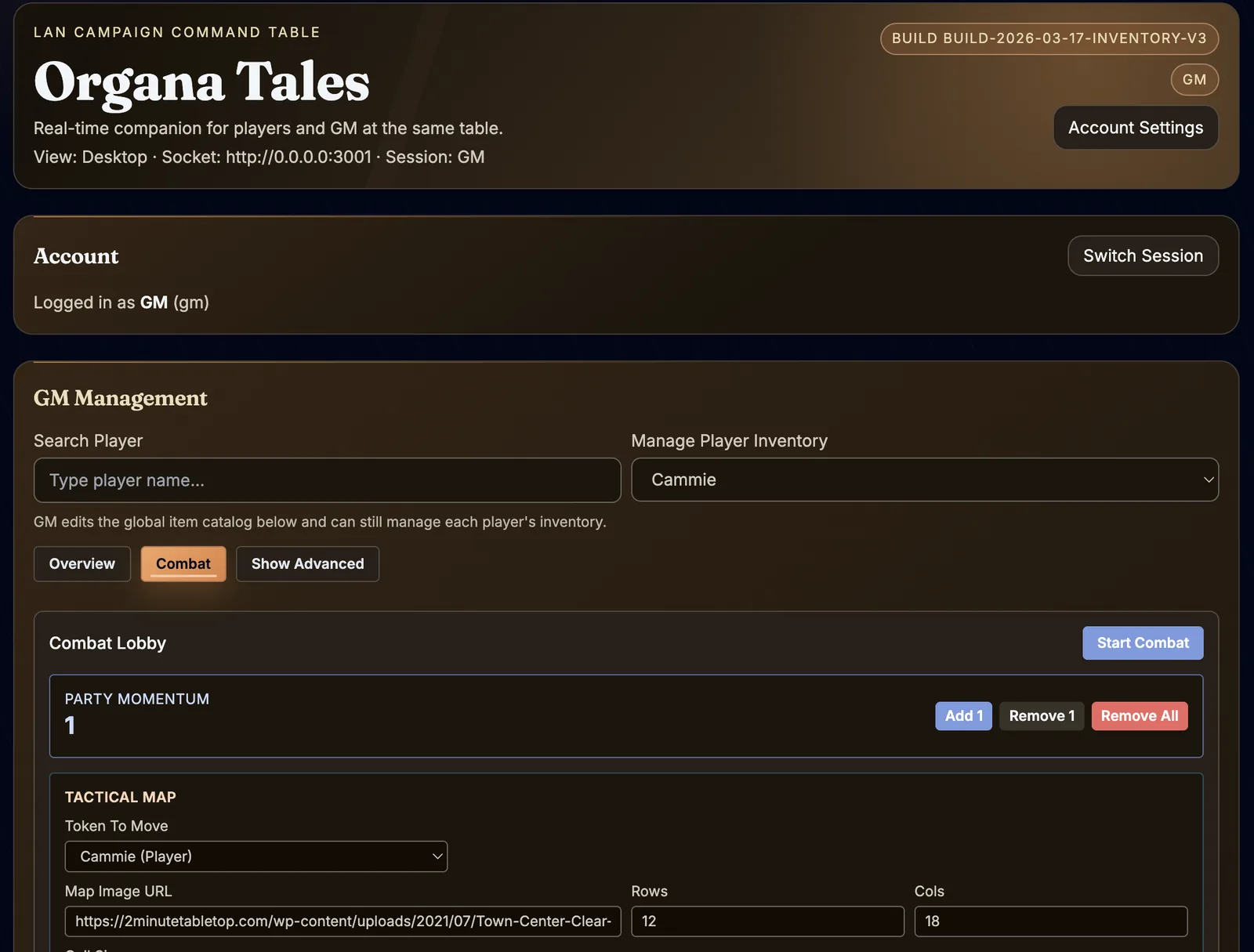
An original tabletop RPG. The rulebook is a 30-page revision of an earlier ruleset and still growing. The world so far includes the first continent and a detailed map of Gambler’s Grove, one of its biggest cities. The game also has its own website.
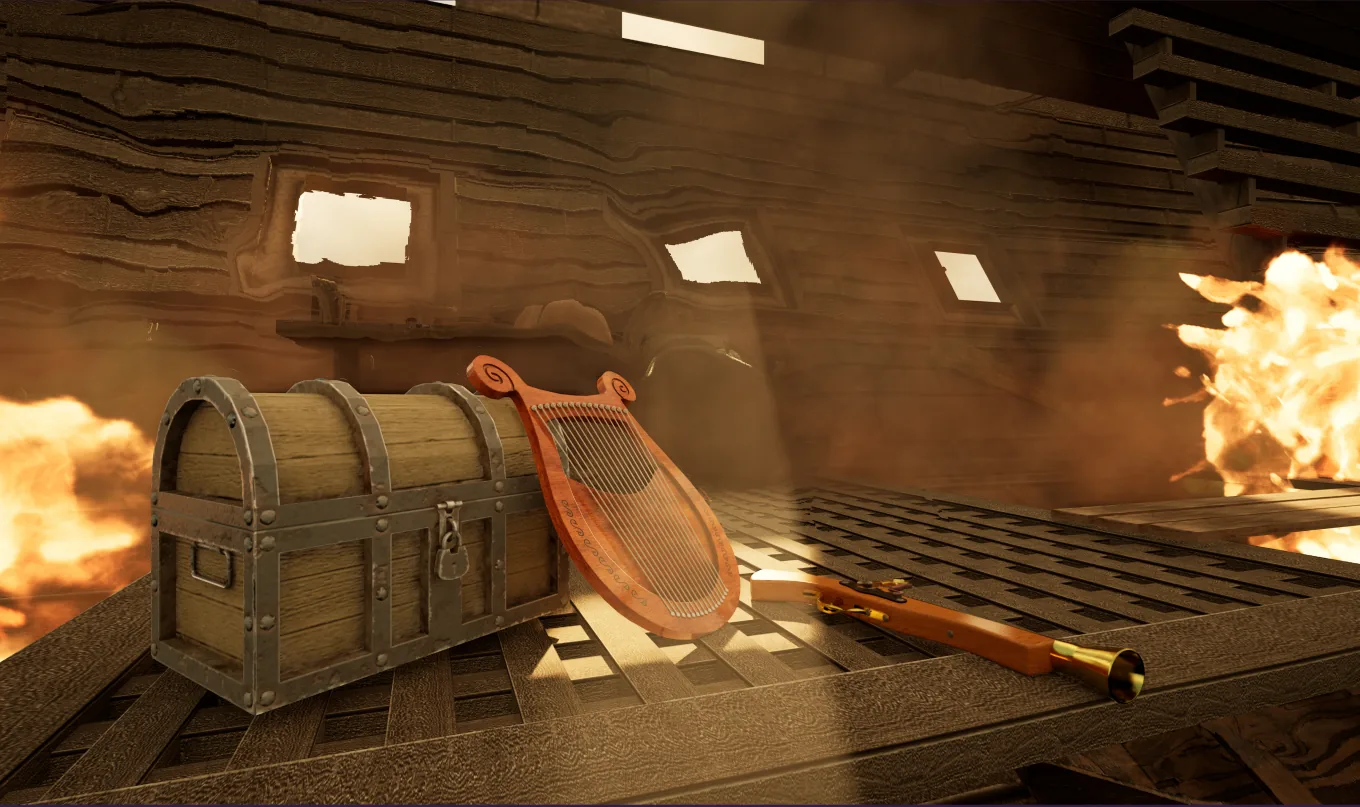
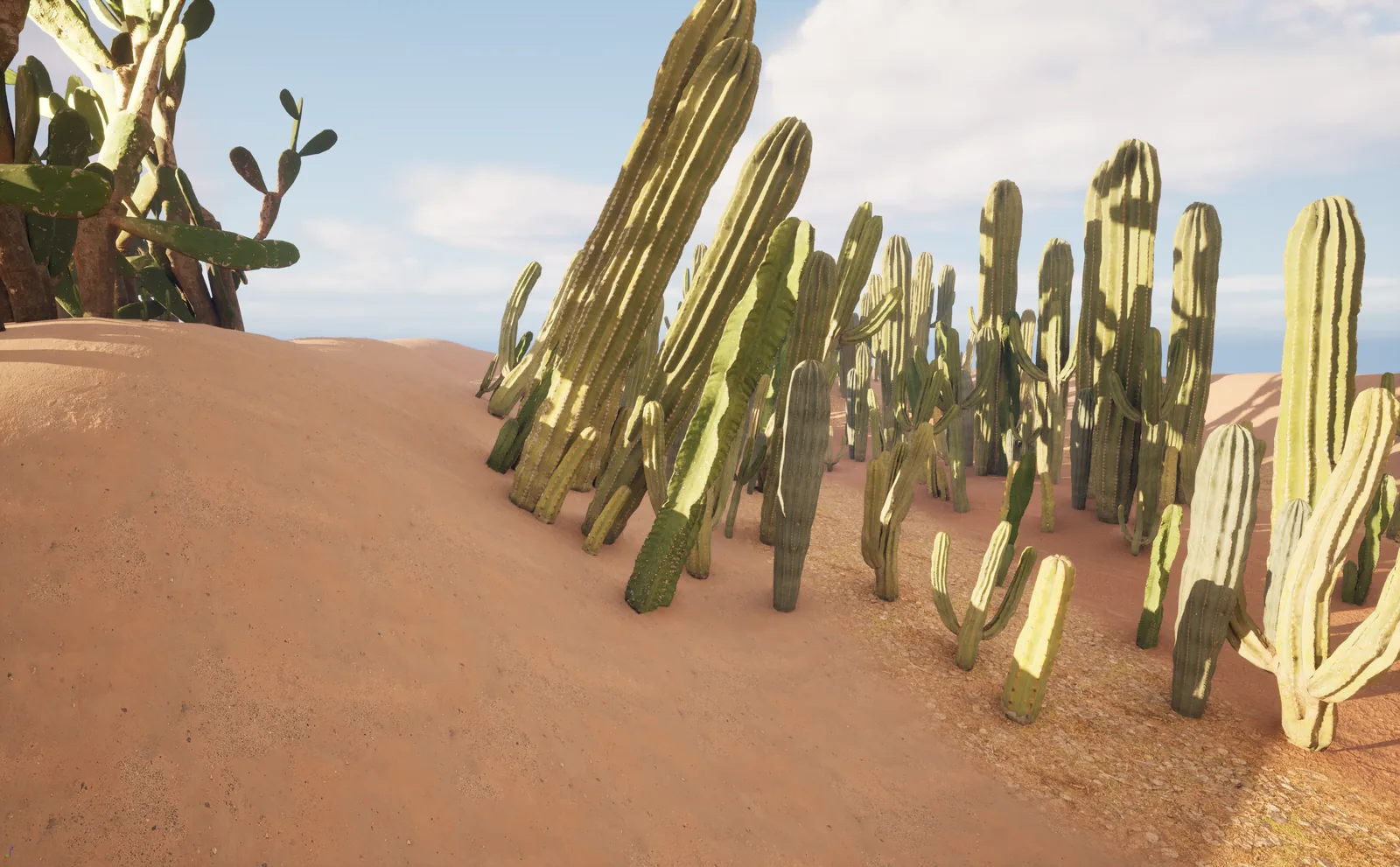
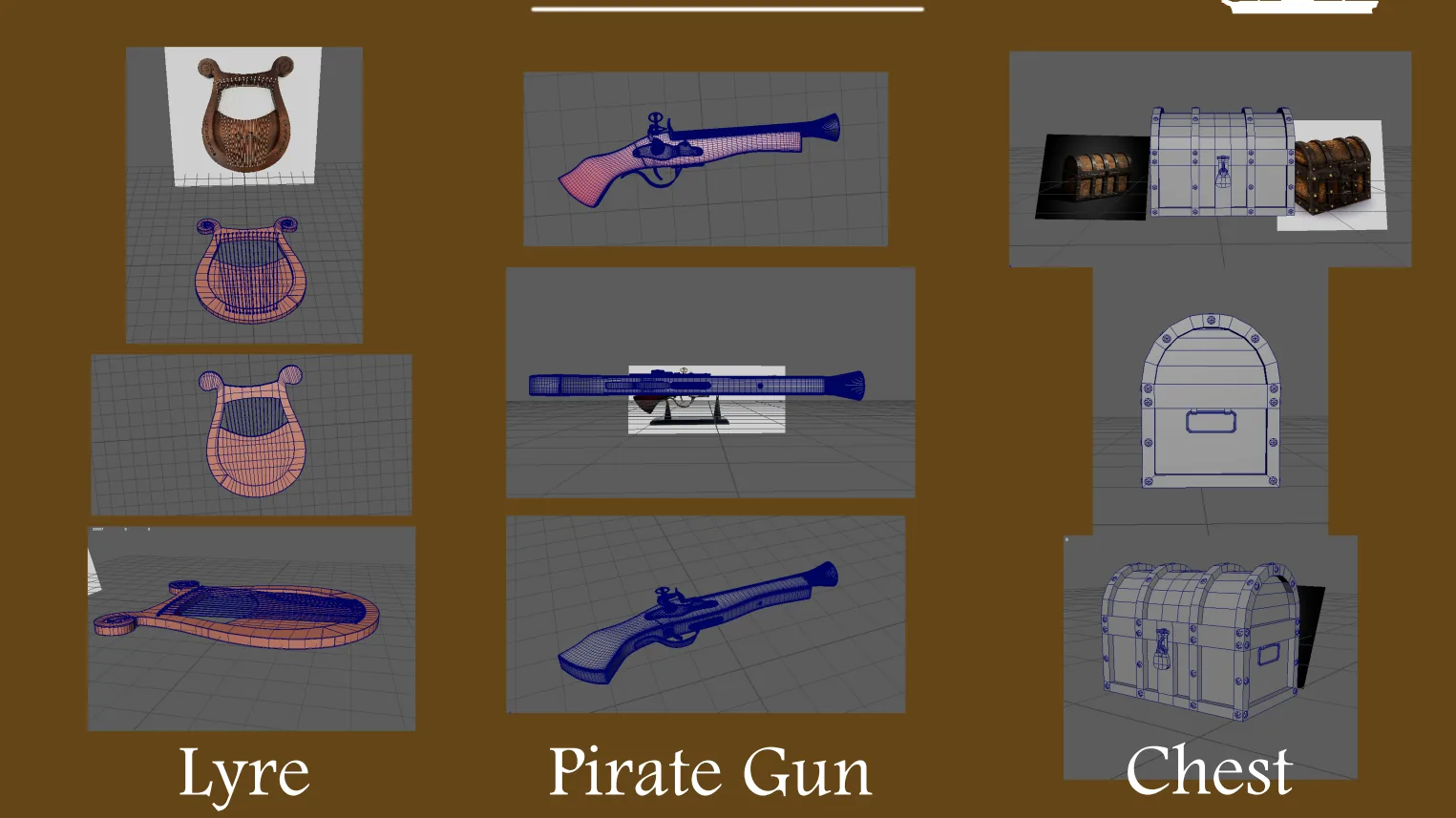
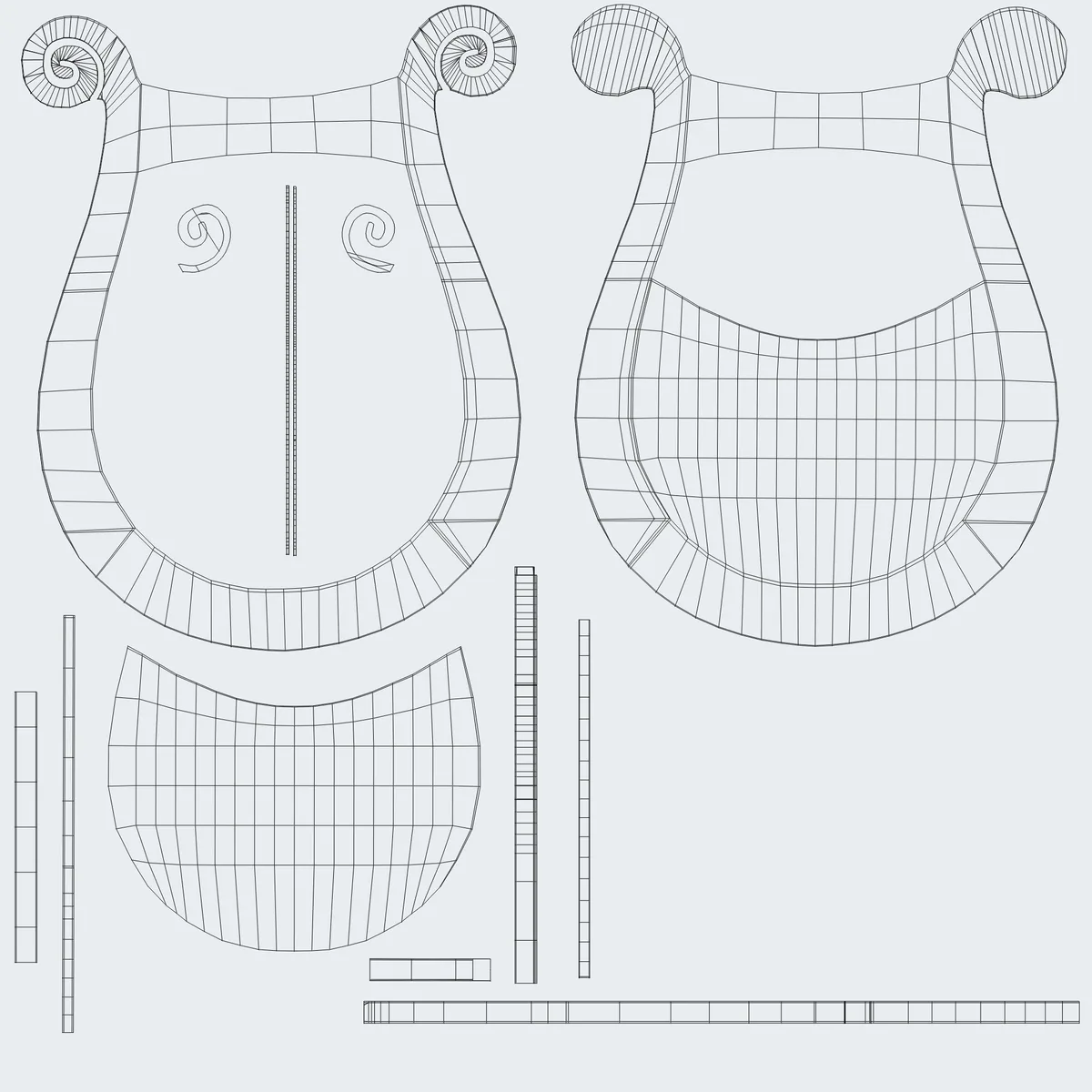
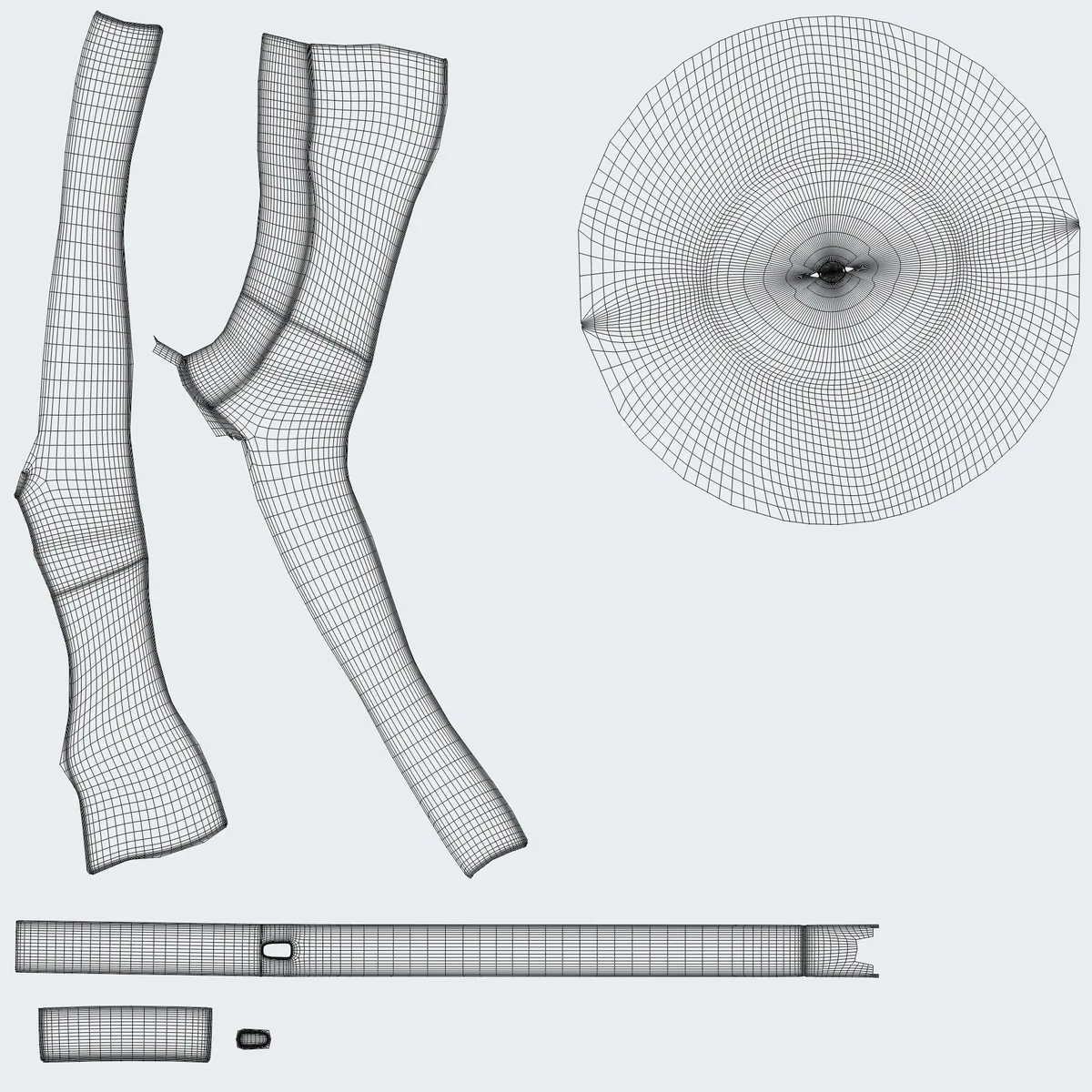
Three props modeled and UV-unwrapped in Maya, then lit and rendered in Unreal Engine: a lyre, a pirate gun, and a treasure chest. Alongside them, a desert environment built in Unreal Engine 5 with landscape tools and scattered foliage, framed low to sell the scale of the dunes.
A project built to show off Atlanta, voiced by Ludacris. I led sound, music, and story design. Press play for the full 3:23 piece with sound, then listen to the music I wrote for it below.
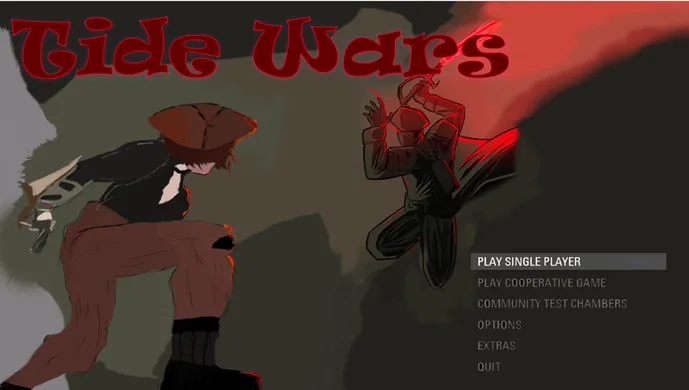
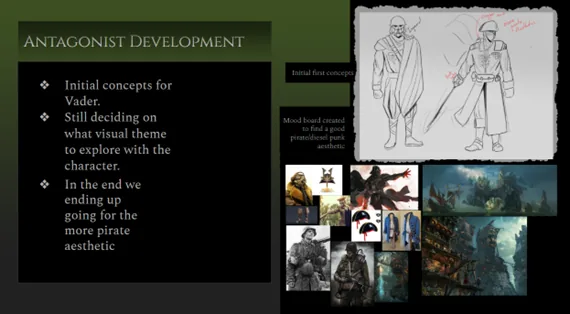
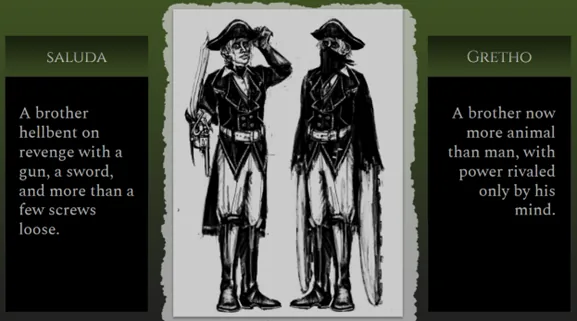
I designed the story, characters, and writing. Shown: my loading-screen design, antagonist development notes, and character sheets.
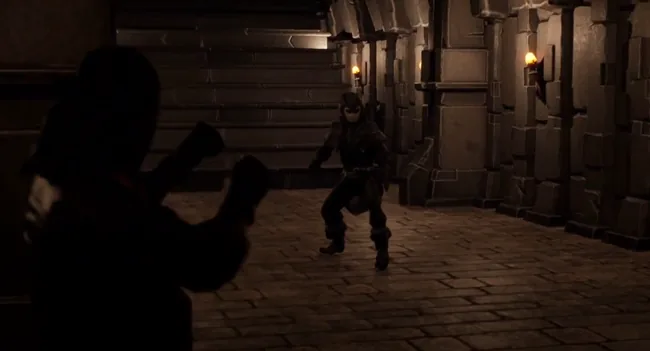
A dark dungeon cutscene made as a team of four. I did animation and character design.
No projects with that tag yet.
Sound design and music are kept apart so each can be judged on its own. Every clip says what I was responsible for, what the sound had to do for the player, and how I built it. Sound on.


My role: every sound. I stripped the audio from six minutes of four-player co-op gameplay and rebuilt all of it: voices, weapons, abilities, traps, orcs, UI cues, ambience, and music.
The challengeFour players fighting at once gets noisy fast. I cut the footage so each player’s point of view gets its moment, and gave the traps a heavier, blocky low end so they stand apart from the weapons.
How I built itI recorded four voice actors in a cardboard-and-blanket booth I built where they live, and let them improvise around each character’s iconic lines. Foley came from a wallet, a water bottle, rings, a cup and spoon, and scissors, shaped with pitch shifting, flanger, and granular effects. I field-recorded running water with a Zoom recorder for the map’s water mill.
The briefNo samples, no recordings. Every effect is synthesized from scratch: three different kinds of water, a sword glint, and the fire near the end, each shaped to match what’s on screen.
Each one starts from the moment it has to sell, then gets layered in Logic from Alchemy and synth patches and shaped with reverb, ring shifting, and bitcrushing.
A spell that takes over the target’s mind. Dark mallets with distant reverb set the tension, then the tail turns bright and playful as the charm lands.
Footsteps of something unknown getting closer as a dream turns into a nightmare. Bitcrushed synth layers and ring shifting, with two copies set to clash so it feels harsh.
An alarm in a dystopian facility, far off and distorted, swelling until the player escapes or gets caught. One layer is atmospheric, one locks to the tempo.
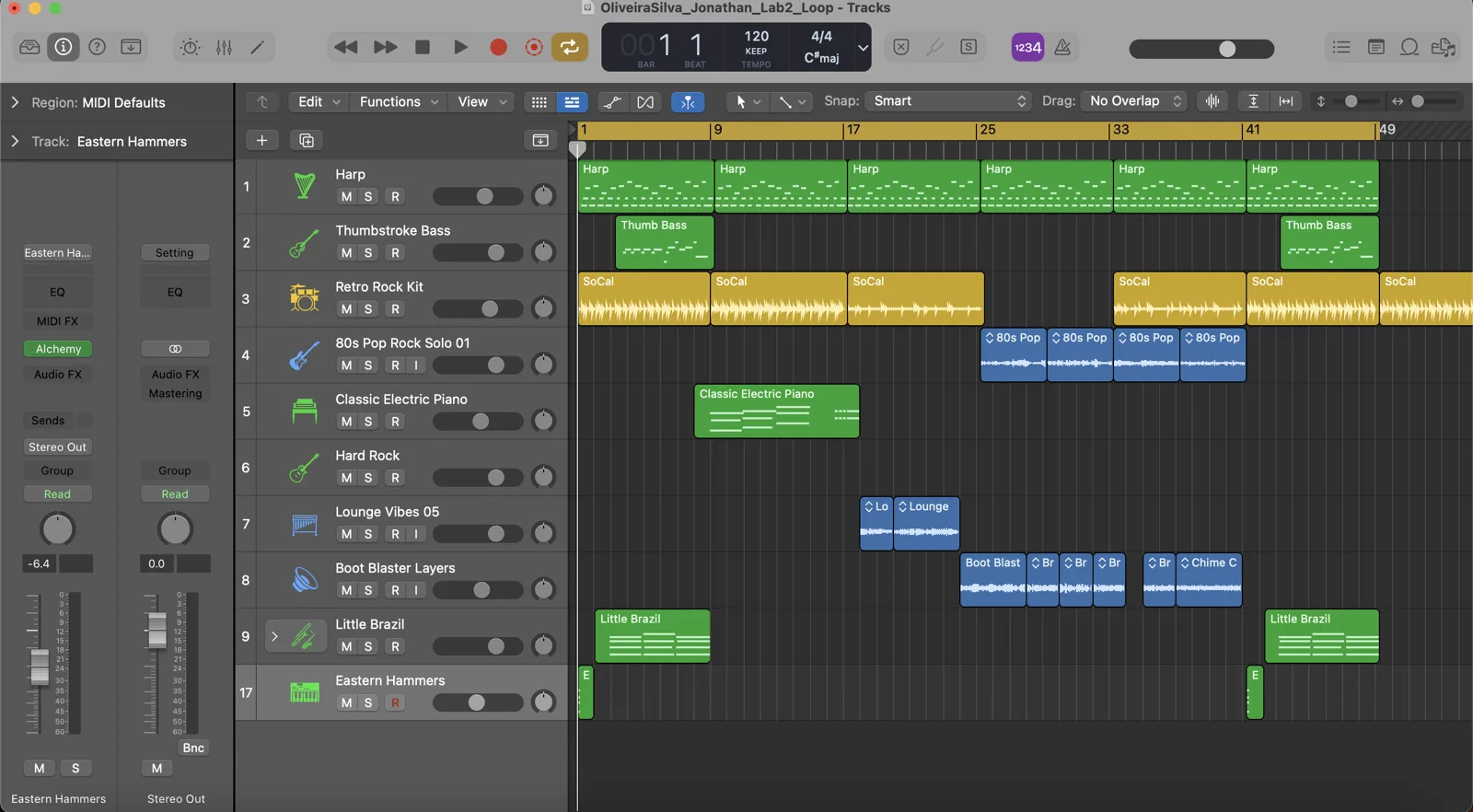
Exploring and fighting get different paces, so the music marks the shift into combat and builds momentum through it. Each stage’s fights use a slightly different tempo, so the score grows with the world.
Eight synthesized effects: merge, level up and down, rolling, rails, hits, steps, and a win jingle. Rising sounds mean good and falling sounds mean bad, and the level-up pitch climbs as balls keep merging, so players hear how they’re doing without looking.

I’m Jonathan Silva, a game designer working across systems, story, and sound. I start with the mechanics, loops, and moments of choice that turn one session into a habit, then prototype and playtest until the game feels right.
Music and writing have always been part of how I build. From the futuristic landscapes of sci-fi to old myths and folklore, I want to make games that captivate players and resonate in sound.
Music and writing are connected arts. Each one makes the other stronger.